Key Takeaways
Actionable Insights for Smarter Social Media Management
Integrating AI-driven social media analytics with scheduling tools enhances your workflow from routine automation to strategic decision-making. When analytics inform scheduling, each post becomes a targeted experiment rather than just another slot on the calendar.
Beyond boosting engagement, combining analytics with scheduling streamlines reporting and ROI tracking. Predictive features – such as forecasting optimal posting times, surfacing trending topics, and analyzing sentiment – help marketers decide what to post, when, and why. For practical guidance on automating reporting, see this step-by-step guide to AI-powered reporting.
However, human judgment remains essential. Regularly review AI insights to ensure your content aligns with your brand voice and avoids becoming generic. Over-reliance on automation can flatten creativity or drift off-brand. The most successful marketers use AI as a strategy partner, not a replacement for creative thinking. For an in-depth look at balancing automation and authenticity, this opinion piece on automation and authenticity is a valuable resource.
Introduction: Why Analytics-Driven Scheduling Is Now Essential
Moving Beyond the Scheduling Shortcut
It’s tempting to believe that simply scheduling posts guarantees social media success. Many brands invest heavily in content calendars, assuming that consistency alone will drive results. But without examining what’s actually working, engagement remains inconsistent and opportunities are missed. Growth comes not from posting on time, but from adapting based on data-driven insights.
Defining Social Media Analytics – and Its Evolution
Social media analytics has advanced far beyond manual spreadsheets and basic reach metrics. Today’s tools, especially those integrating AI, analyze massive data sets in real time – highlighting not just what’s popular, but why certain posts gain traction. AI-driven scheduling apps now recommend adjustments, forecast top-performing topics, and help decode the emotion behind audience comments. This enables marketers to identify trending hashtags, pinpoint optimal posting windows, and respond quickly to shifts in sentiment. For a deeper breakdown of these capabilities, see this comparison of top AI social media analytics tools.
Why Integration Multiplies Efficiency
When analytics and scheduling operate separately, valuable opportunities are lost. But integrating your scheduler and analytics engine creates a feedback loop that manual tracking can’t match. Integrated AI analytics can flag posts needing tweaks before they go live, suggest smarter content mixes, and automate reports that once took hours. That frees you to focus on strategy and creativity rather than routine number crunching. PostNext, for example, keeps multi-platform scheduling, a visual calendar and an engagement dashboard for your X, Instagram, TikTok and LinkedIn posts in one place. For practical examples, see this guide to AI-powered campaign coordination.
Social media analytics is now the difference between guessing and growing. Marketers who recognize this are already seeing stronger engagement and more efficient workflows – proof that real results come from blending smart scheduling with actionable data.
What Is AI-Driven Social Media Analytics?
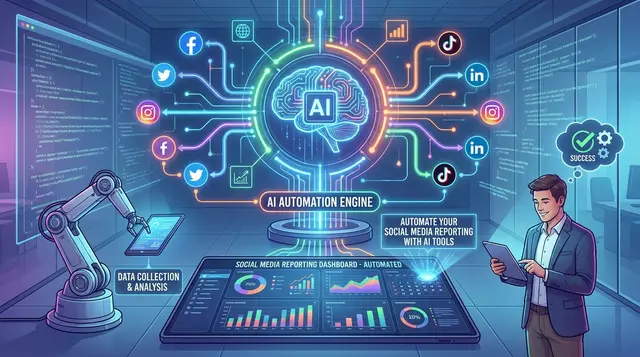
AI-driven social media analytics removes guesswork by analyzing large volumes of social data in real time. Unlike basic dashboards that simply display likes and shares, these systems use machine learning to surface insights you might otherwise miss. The goal: identify what works, predict what will work next, and automate routine tasks so you can focus on high-impact creative and strategic decisions.
What sets AI-powered analytics apart is the ability to spot patterns and trends that aren’t obvious at a glance. Modern tools can recommend posting times, suggest hashtags, and predict which content formats will outperform others. Natural Language Processing (NLP) enables brands to analyze comments and messages for sentiment, providing a deeper understanding of audience reactions.
Automating routine reporting and content checks frees time for creative and strategic work. For practical examples, see AI Analytics Can Reveal Hidden Trends in Your Social Media Data (2026 How-To Guide).
However, there are limits. Data privacy remains a concern, especially as AI tools process more personal information. Sentiment analysis can misinterpret sarcasm or cultural context. And while AI can recommend, it can’t replace the intuition and authenticity that come from human experience. Marketers must validate AI suggestions and ensure content maintains a genuine brand voice.
Traditional vs. AI Analytics: A Quick Comparison
Traditional social media analytics are rule-based and descriptive. You’d export CSVs and manually sift through data to find what worked. AI-powered analytics, by contrast, are built for speed, scale, and actionable prediction. Instead of just showing past performance, they forecast trends and flag opportunities – essential for brands managing multiple platforms.
With AI, it’s less about tracking past actions and more about anticipating audience behavior. For example, AI can alert you if a post is likely to underperform or recommend a different headline based on sentiment analysis. This agility is especially valuable in fast-moving markets. For a deeper dive, see Manual vs AI Social Media Calendars: Which Workflow Saves More Time in 2026?.
| Component | What It Does | Why It Matters |
|---|---|---|
| Predictive Insights | Forecasts which posts, times, and formats will drive the best results | Helps you focus resources where they’ll have the most impact |
| Sentiment Analysis | Analyzes audience reactions, detecting positive, neutral, or negative responses | Enables proactive reputation management and tailored engagement |
| Content Recommendations | Suggests hashtags, captions, and visuals optimized for each platform | Boosts reach and engagement by aligning with trending topics and preferences |
| Automated Reporting | Generates regular performance reports and strategy suggestions | Saves time and ensures you always have up-to-date, actionable information |
| Multi-Platform Integration | Combines analytics from Instagram, Twitter, LinkedIn, TikTok, and more | Provides a unified view, making it easier to coordinate cross-channel strategy |
AI-driven social media analytics isn’t about replacing humans. It’s about freeing you from repetitive analysis and surfacing insights you’d miss otherwise. When paired with human creativity and judgment, these tools offer a genuine edge in a crowded, dynamic market.
How AI Analytics Transforms Social Media Scheduling Apps
Social media scheduling once meant picking a date and time, queueing up posts, and hoping for the best. Integrating AI analytics with scheduling apps has fundamentally changed that process. Now, every scheduled post becomes a calculated move grounded in data.
Modern social media analytics predicts what is likely to work before you even hit “schedule.” Some apps embed dashboards that forecast which posts will perform best or which hashtags are trending. PostNext takes a narrower approach: on paid plans it ranks your strongest posting slots from the engagement your own X, Instagram, TikTok and LinkedIn posts earned over the last 90 days. Top AI analytics tools now combine these features, giving you a single interface for channels like Instagram, TikTok, LinkedIn, and more.
This integration means your content calendar adapts with your audience – shifting post times, suggesting updated captions, and flagging when a planned piece might miss the mark. This is a significant evolution from the old “set and forget” mentality.
Before/After: From Static Scheduling to Intelligent Automation
| Before | After |
|---|---|
| Manual workflow: You manually pick post times based on guesswork or a basic chart of “peak hours.” After publishing, you wait for platform analytics to trickle in – often days later – then sift through numbers to see what worked. Adjustments are slow, and content is rarely updated once it’s in the queue. | Intelligent automation: AI analytics suggest posting windows based on past engagement. As you build your calendar, the app flags if a post’s topic is cooling off or suggests an alternative headline likely to perform better. After posting, the results feed back into future recommendations. Cross-channel insights help you tweak messaging for each platform without rebuilding your strategy from scratch. |
Key Insight: The real value of AI-powered social media analytics is its ability to turn static scheduling into a living strategy that evolves with your audience and multiplies the impact of every post.
Beyond time savings, this integration makes your entire workflow smarter. Predictive insights and multi-channel analytics help you avoid missed opportunities and wasted posts. It’s a shift from tactical execution to strategic content planning, where every step is guided by current data. In PostNext, the scheduler and a per-post engagement view for X, Instagram, TikTok and LinkedIn sit in the same app, so you can check results before planning the next week. To see how AI-driven scheduling compares with traditional methods, check out this detailed comparison of manual versus AI-powered workflows.
Core Components of AI Social Media Analytics
AI-powered social media analytics have redefined what marketers can expect from scheduling tools. It’s no longer just about publishing posts on time. Now, leading platforms offer analytics dashboards that dig into every dimension of your content’s performance and audience behavior – providing a foundation for smarter, more agile strategies.
Core Analytic Features in Modern Scheduling Apps
Analytics-focused tools usually organise their features into four pillars. Not every scheduler covers all four: PostNext, for example, tracks per-post engagement and audience growth, but it does not do sentiment analysis or audience segmentation. Each pillar tracks specific metrics that matter for different reasons:
| Component | What to Track | Why It Matters |
|---|---|---|
| Trend Identification | Emerging hashtags, viral topics, content formats gaining traction | Pinpointing trends early lets you join or shape conversations before they peak, maximizing reach and engagement. See this step-by-step guide for practical tactics. |
| Audience Segmentation | Demographics, active times, platform preferences, engagement clusters | Understanding who interacts with your content enables precise targeting and deeper personalization, helping campaigns resonate rather than scatter. |
| Sentiment Analysis | Positive, neutral, and negative reactions in comments, direct messages, and mentions | Monitoring sentiment helps you manage reputation, address issues proactively, and spot advocacy or brewing crises before they escalate. |
| Content Scoring | Performance metrics (engagement rate, shares, saves), AI-predicted impact | Content scoring surfaces what really works and why, so you can double down on successful formats and iterate quickly. AI models increasingly forecast success, not just report past performance. See how leading analytics tools stack up here. |
For marketers, the priority is to monitor these metrics in context. Trend identification offers early-mover advantage. Sentiment analysis is your frontline for brand health. Segmentation and content scoring translate numbers into clear, tactical next steps – what to post, who to target, and when to adjust course.
Emerging AI Features in 2026 Scheduling Tools
The analytics arms race is intensifying in 2026. Leading platforms now embed NLP-powered comment analysis that goes beyond keyword spotting. These models surface not just sentiment polarity, but also customer intent, urgency, and nuanced emotion – helping brands catch subtle shifts in audience mood.
Another frontier is cross-platform optimization. AI now compiles analytics across Instagram, LinkedIn, TikTok, and more, comparing performance in a unified dashboard. This makes it possible to identify which types of posts work best on each platform, and to adapt scheduling or messaging accordingly. Features like predictive analytics – forecasting which posts are likely to succeed based on prior data – are now essential for serious strategy in 2026.
Real-time topic and audience discovery is also gaining traction. AI can suggest new audience segments based on recent interaction patterns or recommend content pivots in response to fast-moving trends. These capabilities help marketers anticipate, not just react, and carve out a competitive edge. Real-time actionable insights are what separate brands that keep up from those that lead.
While these features provide a significant advantage, the most successful social media teams combine AI analytics with human perspective. Data is the compass, but creativity still steers the ship.
How to Choose the Right Scheduling App with Integrated AI Analytics
Finding a scheduling app that truly moves the needle for your social media efforts in 2026 means looking beyond basic time slots and automation. The right choice will combine AI-driven analytics with powerful scheduling, so you can turn raw data into a strategy that actually delivers. Here’s how to sort through the noise and pick a tool that fits your workflow – without missing out on the latest analytics capabilities.
- Real-time predictive insights: Look for platforms with dashboards that forecast post performance based on historical data and current trends.
- Sentiment analysis: AI that parses comments and messages to gauge audience mood is now essential. If your tool can’t spot a brewing crisis or opportunity, keep looking.
- Automated reporting: Apps should auto-generate reports, saving you hours each week by summarizing engagement, reach, and content effectiveness.
- Multi-platform analytics: Managing Instagram, LinkedIn, TikTok, and more from one place – with unified analytics – streamlines both strategy and reporting.
- Customizable metrics: You need to track what matters to your brand, not just canned KPIs. Flexible dashboards are a must.
Don’t sacrifice integration ease for analytics power. Before you commit, assess whether the app easily connects with your existing tools – whether that’s your CRM, project manager, or creative asset libraries. This step-by-step guide breaks down common integration hurdles and how to avoid them.
Key Insight: The best scheduling app in 2026 is the one that lets you act on AI-powered social media analytics without disrupting your existing workflow.
Integration Scenarios: Native vs. Third-Party Analytics
Not all analytics are created equal. Some scheduling apps offer built-in, native AI analytics that work right out of the box. Others rely on you connecting external AI tools via API or export/import workflows.
| Native AI Analytics | Third-Party Analytics Integrations | |
|---|---|---|
| Setup Time | Immediate – no extra configuration | Varies – requires connecting accounts or data exports |
| Data Flow | Insights inside the app, refreshed on the tool’s schedule | May require periodic syncing or manual updates |
| Feature Depth | Focused on social media metrics, often with AI-specific predictions | Potential for broader or deeper analytics, but less tailored |
| Usability | Unified experience; no tab switching | Split dashboards; more complexity for teams |
| Cost | Included in subscription (usually) | Additional fees for external tools |
PostNext has native analytics, so there is nothing extra to connect: per-post engagement for X, Instagram, TikTok and LinkedIn, a daily follower-growth trend for X, Instagram, Threads and TikTok, and, on paid plans, a best-time panel ranked from your own posting history. It does not forecast how a post will perform. The analytics feature page lists exactly what is covered. For a closer look at how PostNext’s analytics stack up against other tools, see this in-depth comparison.
Choosing the right app isn’t just about features on paper. Consider your current workflow, your team’s appetite for new integrations, and how crucial real-time social media analytics are to your strategy. In 2026, the bar is higher than ever – and the right tool can make all the difference between generic output and campaigns that actually perform.
Step-by-Step: Integrating AI Analytics with Your Scheduling Workflow
Integrating AI analytics with your scheduling workflow is about creating a feedback loop that lets you act on data in real time, adapt to shifts in audience behavior, and stop guessing when it comes to social media strategy. Here’s how to do it right, with concrete steps and examples marketers can actually use.
Connect Your Accounts and Select Data Sources
First, bring your analytics and scheduling tools together. Most platforms now support direct integrations – connect your Instagram, LinkedIn, X (Twitter), and TikTok accounts to a single scheduling app that supports AI-driven analytics. If you’re using a tool like PostNext, this step is handled within the account setup. Choose which channels you want to analyze and publish to; the more complete your data sources, the richer your insights.
Don’t settle for the basics. Depending on the tool, analytics can include engagement metrics, audience demographics, sentiment data, and trending topics. Coverage varies by platform API, so check which metrics each tool actually collects for each channel. The goal is a comprehensive view of what’s working and what isn’t – without toggling between multiple browser tabs.
Define KPIs and Configure Dashboards
Once your accounts are connected, move beyond vanity metrics. Define specific KPIs that matter to your business – such as click-through rates, audience growth, share of voice, or conversion events. Configure your dashboards to surface these KPIs front and center. If your platform allows, set up different views for campaign-level and channel-level analysis.
This isn’t about more data; it’s about actionable reporting. AI analytics tools can forecast which types of posts are likely to perform best, highlight underperforming content, and even suggest keywords or hashtags to boost reach. For a deeper dive into how top analytics dashboards compare, see this feature-by-feature breakdown.
Iterate: Use Insights to Adjust Content, Timing, and Formats
Now comes the real value. Review your dashboards regularly – AI can’t replace your judgment, but it can surface patterns you’d miss. Maybe your audience engages more with video on Fridays, or carousel posts spike in the evening. Adjust your content calendar, posting times, and formats based on these insights. The strongest teams use analytics to experiment and refine quickly, not just to report results after the fact.
| Before | After |
|---|---|
| Posts scheduled at random times, using the same caption format across all platforms. Reporting consists of monthly engagement totals. Adjustments made based on gut feel or occasional feedback. | Posts scheduled at AI-recommended times for each platform, with format and captions adjusted per channel. Dashboards track real-time KPIs like saves, shares, and sentiment shifts. Posting strategy is updated weekly based on analytics trends. |
The “after” approach works because it turns scattered scheduling into a data-driven routine. You’re not just automating tasks – you’re actually improving results, supported by evidence, and able to adapt faster than competitors relying on guesswork.
Automating Reports and Performance Alerts
No marketer wants to spend hours compiling reports or worry about missing critical performance swings. AI analytics tools now automate this work. Set up scheduled reports to deliver weekly or monthly performance summaries straight to your inbox or Slack channel. More advanced platforms let you customize who gets what – so your stakeholder gets a topline summary, while your team receives granular breakdowns.
Performance alerts are where AI shines. Configure real-time notifications for key events – if a post goes viral, negative sentiment spikes, or engagement drops, you get an immediate heads-up. This enables you to jump on emerging trends, adjust campaigns, or respond to issues before they escalate. For a detailed walkthrough on building these workflows, check this step-by-step guide to automated reporting.
Example: Using PostNext to Connect AI Analytics and Scheduling
With PostNext, start by connecting your social profiles from the channel management screen. Analytics history builds up from the day you connect each account; past posts are not backfilled, so give it a few weeks before drawing conclusions. The dashboard shows per-post engagement for X, Instagram, TikTok and LinkedIn (engagement rate, reach, impressions, likes, comments, saves and shares) and a daily follower-growth trend for X, Instagram, Threads and TikTok, over 7, 30 or 90 days (the exact metrics depend on what each network’s API provides).
On paid plans, the date picker shows the three strongest time slots from your own last 90 days of X, Instagram, TikTok and LinkedIn engagement, so the timing suggestion appears where you schedule. When you need a report for your team or a client, export the numbers as CSV or PDF, or turn on the weekly or monthly report email (paid plans) for recipients inside or outside the workspace. PostNext does not do sentiment analysis or send engagement alerts, so pair it with a listening tool if you need those. For more on how this workflow compares with traditional approaches, see this manual vs. AI scheduling comparison.
Integrating AI analytics with your scheduling workflow is an ongoing cycle of action and refinement. The marketers seeing the biggest gains in 2026 are those who treat analytics as an always-on engine for strategy, not just a rearview mirror.
Turning Analytics into Action: Optimizing Posting Strategies in Practice
Social media analytics only matter if they drive real change. The difference between a team that “checks the dashboard” and one that reworks campaigns based on analytics is significant. With AI-powered insights, you can stop guessing and start making strategic, evidence-backed adjustments to your posting approach.
Pinpoint What Actually Works – And Double Down
The best place to start is with AI-generated reports that highlight high-performing topics, formats, and time slots. Instead of relying on intuition or last month’s top post, you’ll see clear trends. For example, if analytics reveal that video carousels posted on Tuesday afternoons spark higher engagement, you can recalibrate your content calendar to prioritize those formats and slots.
Multi-platform analytics make it just as easy to compare what resonates on Instagram versus LinkedIn or TikTok. In PostNext, per-post engagement on X, Instagram, TikTok and LinkedIn uses the same engagement-rate calculation, so they compare like-for-like, while Threads appears in the follower-growth trend. This is especially valuable for marketers managing several client accounts or brand verticals.
Refine Hashtag and Content Cadence with AI Recommendations
AI doesn’t stop at formats and timing – it also helps you fine-tune your hashtag strategy. Advanced tools analyze which hashtags actually drive impressions and which ones bring in your target demographics. For a detailed workflow, see this guide on AI-powered hashtag optimization. AI also spots when your content cadence is too aggressive or too sparse, nudging you to adjust for consistency without overwhelming your audience.
Don’t neglect sentiment analysis. AI-powered NLP features scan comments and DMs to highlight shifts in audience mood. When analytics flag a spike in negative sentiment after a particular post type, it’s time to rethink the approach – sometimes a quick format swap or tone adjustment does more than a new hashtag ever could.
Blend Data with Brand Voice and Creative Judgment
AI is an accelerant, not a replacement for creativity. Industry experts warn against a “paint by numbers” approach that drains content of personality. The strongest brands use analytics as a feedback loop, not a script. You might learn that your audience prefers humorous posts on Fridays, but how you deliver that humor should still sound like your brand, not a bot.
Schedule time to review analytics with your team – and ask what the numbers don’t show. A spike in impressions might not translate to genuine engagement if comments are generic or off-topic. Use AI-driven suggestions as a springboard, then adapt them using your knowledge of your community and brand values. Platforms like PostNext streamline the analytics-to-action workflow, but only you can ensure the end result still feels authentic.
A hypothetical example:
| Before | After |
|---|---|
| Generic Posting: Shared the same image quotes daily at 9am using popular but broad hashtags (#motivation, #success). Engagement plateaued, and comments often felt automated. Results: Flat follower growth, low engagement spikes, repetitive feedback. | Analytics-Driven Approach: Used AI analytics to find that the audience preferred short behind-the-scenes videos posted at 2pm on Tuesdays and Thursdays, paired with niche hashtags surfaced by AI tools. Results: Noticeable increase in engagement, more meaningful comments, and a surge in user-generated content submissions. |
The “before” version relied on guesswork and trended content, leading to audience fatigue. By letting social media analytics dictate both content type and timing – and weaving in more specific, relevant hashtags – engagement became deeper and more consistent. The difference isn’t just in the numbers; it’s in the quality of interaction and brand relevance.
Key Insight: The fastest way to improve your social media strategy is to let analytics steer your decisions, then overlay your brand’s unique voice for authentic, measurable results.
If you want to see what’s possible with modern multi-channel analytics, compare the top AI social media analytics tools for 2026. The right platform will do more than report numbers – it’ll surface actionable insights you can use to refine every post, hashtag, and campaign you launch.
Limitations, Risks, and Ethical Considerations of AI-Powered Social Media Analytics
AI-powered social media analytics can be a force multiplier for marketing teams, but there are limits and risks that can’t be ignored. The rush to automate reporting, content recommendations, and scheduling has created new challenges around privacy, content quality, and accessibility – especially for smaller brands.
Data Privacy and Compliance: Navigating Regulation
AI analytics platforms process vast amounts of user and audience data to deliver actionable insights. This data flow introduces real compliance responsibilities. Regulations like GDPR in Europe require brands to be transparent about how social data is collected, processed, and used. Failing to follow these guidelines can lead to penalties and erode customer trust, especially as Natural Language Processing (NLP) expands into comment and message analysis across multiple channels. Marketers need to scrutinize how AI vendors handle data storage and processing, and verify that any tool – whether it’s PostNext or a competing scheduler – offers strong privacy controls. Brands using multi-platform analytics dashboards should ensure all integrations meet compliance requirements, not just the primary scheduling app.
The Cost and Complexity Barrier
While the benefits of AI analytics are clear, not every brand can tap into them equally. Advanced analytics dashboards and predictive features often come with higher price tags and increased setup complexity. For small businesses or nonprofits, this can be a hurdle. The learning curve for integrating multiple platforms and interpreting nuanced analytics may also limit adoption. Some smaller teams still rely on manual reporting or lightweight scheduling tools, as discussed in this real-world example of AI scheduling in a small business.
The Risk of Generic or Tone-Deaf Content
The most advanced AI tools can identify trends and optimize posting times, but they don’t guarantee authentic engagement. Over-reliance on AI-generated captions or content suggestions often leads to posts that feel bland or disconnected from your brand’s unique voice. As noted in 5 Common Mistakes When Automating Social Media, copying AI recommendations without human review can result in tone-deaf messaging or missed cultural nuances – issues that algorithms are still poor at catching. AI can’t fully replace the intuition that comes from knowing your audience or the creativity that produces memorable campaigns.
Balancing Automation and Authenticity
The best results come from a conscious blend of AI-powered analytics and human creativity. Use AI to surface trends, forecast high-performing ideas, and automate repetitive work. Then step in to shape the message, ensure the content fits your brand’s ethos, and adjust for context that algorithms might miss. AI provides the data backbone, but human intuition is essential to craft authentic content that resonates. For a deeper look at how to maintain this balance in practice, see our opinion piece on combining automation with authenticity. Ultimately, AI should inform and support your strategy – not dictate it.
Common Mistakes When Integrating AI Analytics with Scheduling Tools
Key Insight: The most effective social media analytics workflows blend AI-driven insights with custom dashboards and regular human review – automation alone is not enough.
Overlooking Dashboard Customization for Business Goals
A common misstep is sticking with the default analytics dashboards that come with your scheduling tool. AI-powered dashboards are packed with data, but if you don’t take the time to tailor them to your actual business objectives, you end up swimming in metrics that don’t move the needle. For example, a B2B company may care more about lead form submissions from LinkedIn, while a retail brand wants to track Instagram click-throughs. Without custom filters and views, actionable insight gets buried. If you’re unsure where to start, see our guide on how to set up analytics to reveal hidden trends.
Neglecting Regular Review of AI Recommendations
AI analytics can surface an impressive volume of content suggestions and performance insights. But letting those recommendations pile up without acting – or at least reviewing them – undermines the entire investment. Regular check-ins help you spot shifts in audience behavior, seasonal trends, or even algorithm updates that may affect your reach. Skipping this step is a missed opportunity for competitive advantage.
Relying Solely on Automation Without Human Oversight
There’s a seductive promise in “set it and forget it” automation, but over-relying on AI – without periodic human input – can lead to off-brand content, missed context, or even PR headaches. To see why oversight is non-negotiable, read why social media automation management demands constant oversight and cross-reference the broader 5 Common Mistakes When Automating Social Media and How to Avoid Them (2026 Guide).
Other Pitfalls: Ignoring Platform Nuances and Data Privacy
- Using the same analytics-driven posting formula across every channel ignores platform-specific quirks. For example, TikTok’s trends move faster than LinkedIn’s, so your reaction time must match.
- Failing to review how your AI platform processes and stores user data may put you at risk of compliance issues – especially with GDPR or CCPA. Always vet your tool’s privacy posture.
Getting the most out of social media analytics means resisting the urge to automate everything. The best results come from regularly revisiting your dashboards, aligning metrics to business impact, and letting human judgement shape how you act on AI recommendations.
Advanced Tips: Getting More Value from AI Social Media Analytics
Use Sentiment Analysis to Guide Real-Time Campaign Pivots
Sentiment analysis is now a must-have for brands serious about social media ROI. AI-powered analytics platforms scan comments, replies, and direct messages in real time, surfacing whether your audience is reacting positively, negatively, or neutrally to a campaign. When you spot a shift toward negative sentiment, that’s your cue to adjust messaging, update creative, or even pause an underperforming ad before it affects your brand reputation. If positive sentiment spikes around a specific post or hashtag, double down by amplifying those elements across channels. This hands-on approach, backed by AI, turns what used to be monthly reporting into day-to-day course correction – often the difference between a campaign that fizzles and one that gains traction.
Monitor Cross-Platform Performance for Comprehensive Optimization
Marketers still relying on siloed metrics are missing the full picture. AI social media analytics suites now aggregate data from Instagram, LinkedIn, TikTok, and other channels, letting you benchmark performance side by side. This matters because trends rarely stay in one place – what catches fire on TikTok today can inform tomorrow’s LinkedIn post. By tracking content reach, engagement, and sentiment across platforms, you’ll spot patterns that single-platform dashboards overlook. If you’re comparing tools or want a side-by-side breakdown of features, the Top AI Social Media Analytics Tools Compared for 2026 post is a solid resource for power users.
For example, if video content drives engagement on Instagram but falls flat on Twitter, unified analytics help you shift investment where it performs best and adjust your Twitter approach accordingly. This data-driven redistribution helps you maximize ROI instead of spreading effort thinly across channels.
Automate Cross-Team Reporting for Faster Action
Advanced AI platforms don’t just crunch data – they streamline reporting across teams. Instead of waiting on manual reports from each channel owner, you can set up automated dashboards that deliver weekly insights straight to your inbox or Slack. This saves time and, more importantly, helps everyone from content leads to execs make smarter calls faster.
When reporting is automated, you free up creative teams to focus on strategy instead of spreadsheets. For a detailed guide on setting up automated reporting systems, see How to Build an Automated Social Media Reporting System: Step-by-Step for 2026. The best social media teams treat analytics as both a steering wheel and a rearview mirror – guiding future moves while learning from the past.
Getting the most from AI analytics isn’t about using every feature – it’s about knowing where to focus for genuine impact. When you combine sentiment insights, unified cross-platform views, and real-time automated reporting, your social strategy becomes as agile as your audience. That’s what keeps brands ahead in a year when trends change overnight.
Frequently Asked Questions
How does AI analytics enhance social media scheduling?
AI analytics brings a strategic advantage to scheduling by moving beyond simple automation. With AI, you get recommendations on the best posting times, content formats, and trending topics tailored to your audience. The technology can automatically adjust your content calendar, suggest hashtags, and pinpoint opportunities for higher engagement that manual scheduling often misses.
How accurate are AI-generated insights for social media analytics?
AI-generated insights have become increasingly reliable, especially as systems process vast datasets from multiple platforms. By analyzing audience behavior, sentiment, and historical performance, these tools can forecast which posts are likely to succeed. However, even the best AI needs human oversight. Experts stress that while AI delivers actionable data, it can’t replace the creativity and intuition that make content feel authentic.
What are the main benefits of using AI-powered social media analytics tools?
- Time savings: automating tasks like reporting and optimization cuts repetitive work.
- Enhanced targeting: AI identifies which posts resonate best and when your audience is most active, leading to higher engagement rates.
- Sentiment analysis: Natural Language Processing tracks brand reputation and customer feedback across channels.
- Multi-platform insights: AI tools can analyze data from Instagram, LinkedIn, TikTok, and more, consolidating strategy in one dashboard.
For a breakdown of top tools and features, see the 2026 comparison of leading AI social media analytics tools.
How do I integrate AI analytics with my scheduling workflow?
Many scheduling apps include a built-in analytics dashboard. In PostNext you connect your accounts, publish as usual, and the dashboard fills in from your connect date; paid plans add best-time slots drawn from your own posting history. If your tool doesn’t have this natively, look for options that integrate with third-party analytics providers. For a step-by-step guide, check out how to build an automated social media reporting system.
Are there downsides or risks to relying on AI for social media analytics?
There are a few important caveats. Over-reliance on AI can lead to repetitive or generic content if you ignore human input. Data privacy is another concern, since AI tools process large amounts of user information – always ensure compliance with regulations like GDPR. Finally, some advanced AI analytics features may be cost-prohibitive for smaller businesses or require a learning curve to use effectively.
How should I balance AI recommendations with my own experience?
Think of AI as your data-driven advisor, not your creative director. Use its insights to inform your choices – such as which topics to cover or the best times to post – but blend these suggestions with your brand’s unique voice, values, and intuition. The most effective strategies combine AI analytics with human creativity. For practical advice on finding this balance, see our opinion piece on balancing automation and authenticity in social media marketing.
Drafted using PostNext planner