Key takeaways
- Automation is not autopilot. Even good tooling needs active human oversight.
- It handles the repetitive work; it does not hold your brand voice for you.
- The efficiency case is real, which is exactly why over-automation is tempting.
- The failure mode is gradual: authenticity erodes long before the metrics show it.
Automation Isn’t Autopilot: The New Rules of Social Media Management
Key Insight: Even the most sophisticated automation tools require active human oversight to maintain brand authenticity and relevance on social media.
Automation: Powerful, But Never Hands-Off
Social media automation management is often promoted as a solution for saving time and ensuring consistent posting. In reality, automation acts as a force multiplier – it amplifies your efforts, but it cannot replace the need for human judgment.
Unattended automation can lead to costly missteps. Picture a scheduled promotional post going live during a national tragedy: the message lands at the worst possible moment, simply because no one was monitoring the feed.
Why Human Oversight Is Essential
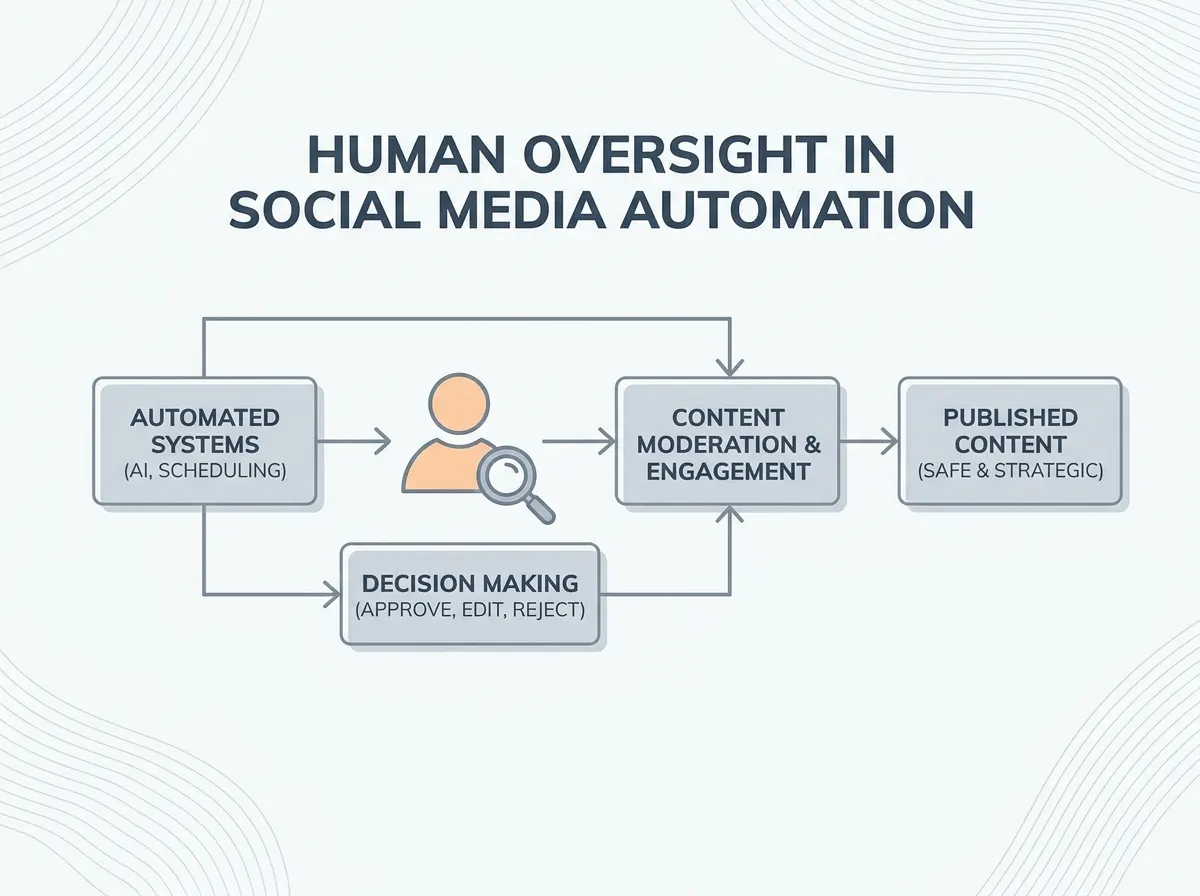
While automation delivers efficiency, brand authenticity and timely relevance demand ongoing attention. Automated tools can streamline workflows, but over-reliance erodes the human element that drives genuine engagement. If no one monitors sentiment or pauses posts during breaking news, brands risk appearing tone-deaf.
You can’t automate instinct. Effective social media automation management depends on smart workflows and vigilant oversight. Regularly review content queues, audit scheduled posts for potential risks, and be prepared to intervene when circumstances change.
Setting Realistic Expectations: Automation as an Assistant
- Automation streamlines routine tasks: scheduling, analytics, and basic engagement become more efficient.
- Human oversight ensures relevance: only people can judge what’s on-brand in the moment.
- Balance is critical: leading brands use automation to support, complementing creative judgment.
Recent advances make it easier to build an efficient social presence. But efficiency without context is not a strategy. Genuine connections and timely pivots require a watchful eye.
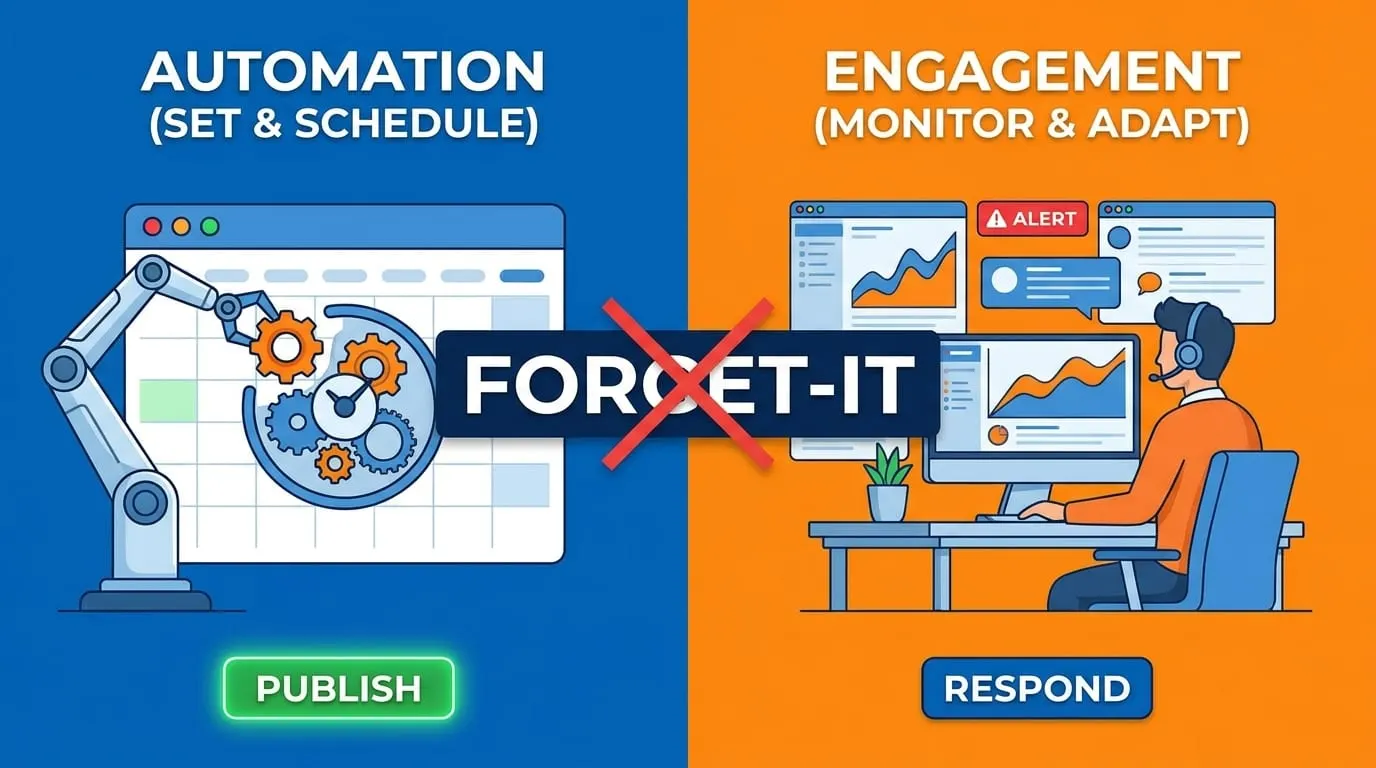
The era of set-it-and-forget-it automation is over. Brands that treat automation as a strategic assistant – not a replacement – build stronger reputations and more resilient communities.
What Is Social Media Automation Management in 2026?
Defining Social Media Automation Management
Social media automation management in 2026 means using software to handle repetitive tasks across platforms, supporting a brand’s digital strategy. This includes scheduling, AI-assisted captioning, analytics, chatbot engagement, and cross-platform coordination.
Core Components and Evolving Workflows
The core elements of social media automation management have become more sophisticated. Tools now suggest hashtags, draft captions with AI, and provide actionable analytics. For instance, AI can recommend optimal posting times or flag posts that may underperform.
However, the line between automation and genuine human engagement remains crucial. Automation ensures consistency, but it cannot replicate the nuanced interactions that define an authentic brand presence.
Automation Tools in Practice
| Automation Task | Typical Tool/Feature | Requires Human Oversight? |
|---|---|---|
| Post Scheduling | Centralized calendar apps | Yes (content review, timing adjustments) |
| AI Caption Generation | AI writing assistants | Yes (brand voice, context check) |
| Analytics & Reporting | Automated dashboards | Yes (interpretation, action planning) |
| Chatbot Customer Interaction | Integrated social platform chatbots | Yes (escalation for complex issues) |
| Cross-Platform Coordination | Multi-platform schedulers | Yes (platform-specific tweaks) |
Human Strategy Remains Central
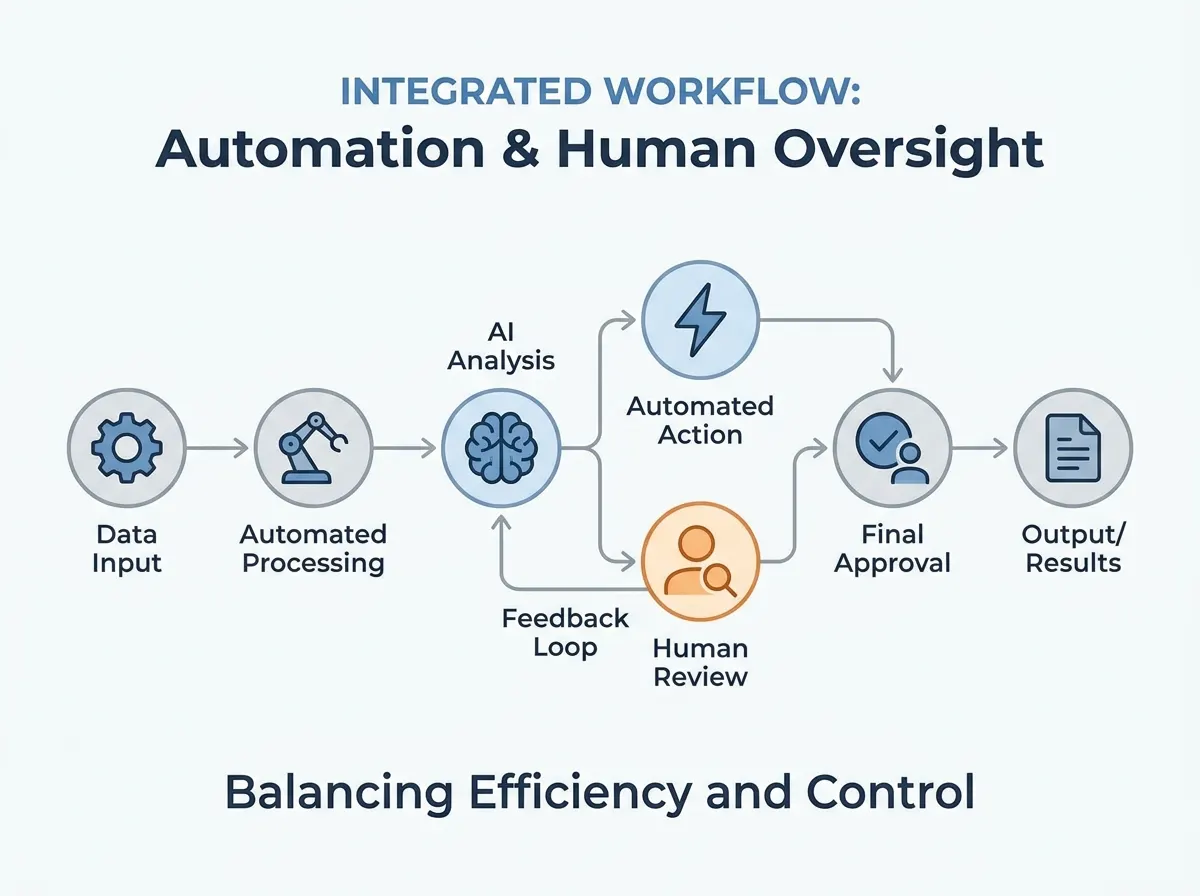
The most effective social media automation management systems don’t try to replace strategy or creativity. Instead, they free up your team to focus on campaigns, storytelling, and meaningful conversations. Automation is a tool – not a substitute for judgment.
The Case for Automation: Benefits and Efficiency Gains
Social media automation management is essential for teams aiming to keep pace with digital communication. The strongest arguments for automation are time savings, consistency, and smarter decision-making through analytics.
For teams, the resource savings are immediate. Instead of spending hours on repetitive tasks, teams can focus on strategy and creative direction. Consistency is vital: automation helps ensure every post aligns with current brand guidelines.
Perhaps most significant is access to actionable analytics. Modern platforms deliver feedback on what works, allowing for strategic adjustments that improve results over time.
AI-Driven Content Creation: Real-World Impact
By 2026, AI-generated captions and hashtag suggestions have become standard for high-volume brands. Companies use AI to draft captions, freeing human creators to focus on originality and tone.
For engagement, AI-driven hashtag suggestions can help extend reach. Data-driven suggestions can help, but only when reviewed and refined by a human for authenticity and brand voice.
Automation’s Achilles’ Heel: The Risk of Losing Authenticity
Social media automation management comes with a risk: over-automation can erode brand authenticity. The more you let tools speak for your company without oversight, the more likely your messaging will feel generic or robotic.
Audiences are perceptive. Generic, obviously automated posts can make a brand feel distant. Automation excels at routine, not intuition. Scheduled posts and chatbots can’t adjust for breaking news or sensitive moments unless a human steps in.
Key Insight: Automation is only as effective as the human oversight behind it – careful management is essential to preserve a brand’s authentic voice.
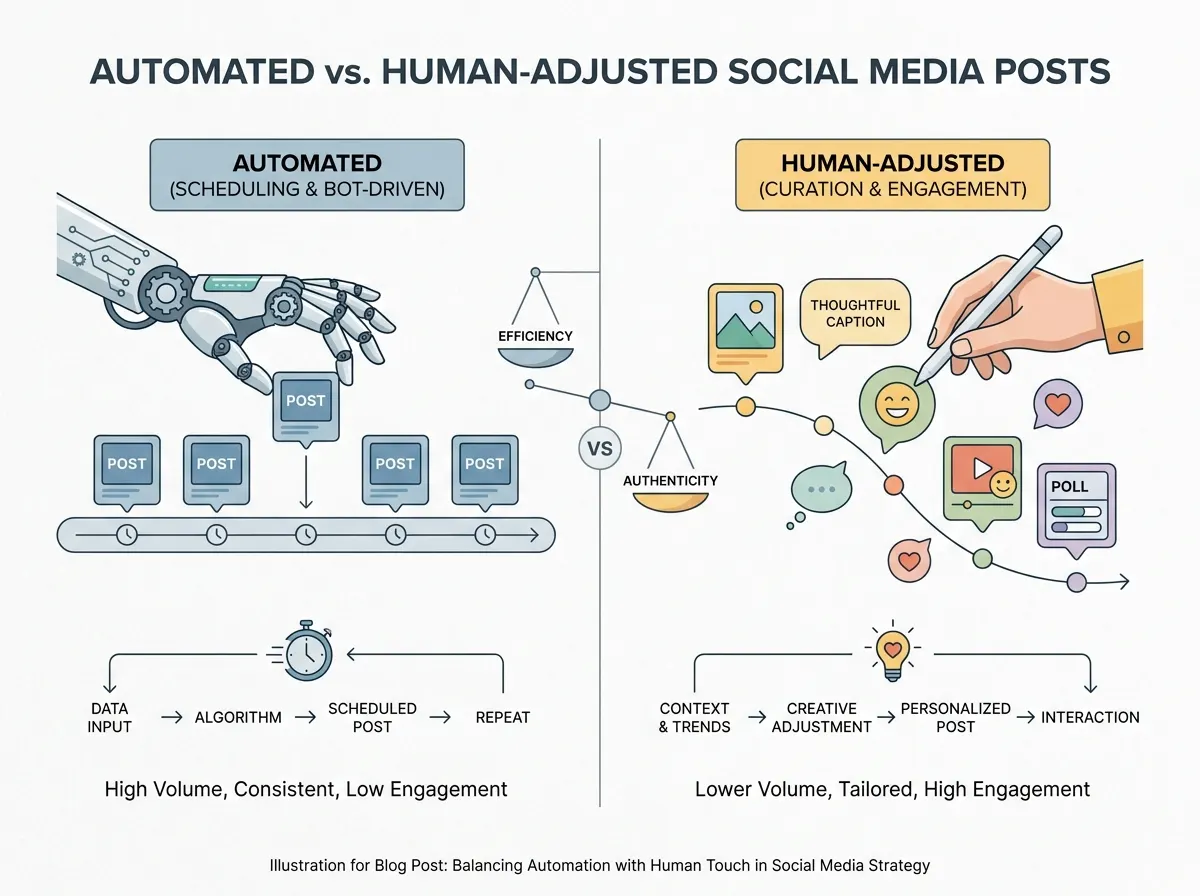
Before/After: Human Oversight vs. Pure Automation
| Before (Pure Automation) | After (Human Intervention) |
|---|---|
| Automated Post: “Happy Monday! Ready to crush this week? 🚀 #MondayMotivation” (Scheduled to go live at 8:00 AM) | Human-Adjusted Post: “We’re pausing our usual Monday updates today. Our thoughts are with everyone affected by the recent earthquake. If you need support or resources, we’ve compiled a list in our bio.” |
In the “before” scenario, the brand’s scheduled post goes out as planned, oblivious to a major event. The tone feels jarring and can lead to negative replies.
In the “after” post, a social media manager intervenes, adjusts the messaging, and signals empathy – protecting reputation and building trust.
The Oversight Imperative: Why Ongoing Management Matters
Some teams treat social media automation management as a one-time setup. That approach leads to mediocre results. The brand environment and audience expectations are always evolving.
Strategic review cycles are essential. Effective brands schedule audits of their workflows, using analytics to spot shifts in performance and audience sentiment.
Continuous adjustment is more than maintenance. Real-time events require swift reactions that automation alone can’t provide.
Signs Your Automation Is Drifting Off-Brand
- Declining engagement rates – if likes and shares dip, automation may be missing the mark.
- Negative comments – audiences notice when content feels disconnected from events.
- Repetitive messaging – identical captions signal that automation settings need a refresh.
- Missed opportunities – if absent during major conversations, rigid automation might be to blame.
- Analytics plateau – when growth stalls, audit which automation rules add value.
Staying proactive with social media automation management is about protecting relevance and ensuring every action feels intentional.
Framework: The Balanced Automation Management Model
Structuring Social Media Automation Management for Real-World Results
Social media automation management is not a binary choice between automation and human input. The strongest teams use a structured framework that anchors efficiency to brand authenticity. The Balanced Automation Management Model includes Planning, Execution, Monitoring, and Adjustment.
The Components of the Balanced Automation Management Model
| Stage | Automation Role | Human Role | Review Frequency | Success Metric |
|---|---|---|---|---|
| Planning | Suggests posting times, drafts captions, recommends hashtags | Refines messaging, sets objectives, approves themes | Monthly | Alignment with brand voice |
| Execution | Schedules posts, auto-publishes, distributes updates | Final review, manual intervention for live events | Weekly | Post accuracy, timeliness |
| Monitoring | Collects analytics, flags anomalies, compiles reports | Interprets data, responds to comments, escalates issues | Daily | Engagement rates, sentiment analysis |
| Adjustment | Recommends optimizations, suggests test variants | Implements pivots, updates guidelines, oversees outcomes | Bi-weekly | Improved ROI, adaptability |
How Balance Drives Better Outcomes
Each component of this model is grounded in best practices. During Planning, AI tools can suggest content angles, but humans must shape ideas to fit brand narratives. In Execution, automation handles scheduling, but final review remains in human hands.
Monitoring is where automation excels at surfacing trends or outliers, but only a person can deliver the right response in real time. Finally, Adjustment is the feedback loop: automation identifies what works, while humans recalibrate strategy.
Real businesses are moving away from “set-and-forget” automation. Leading teams use analytics to spot opportunities for authentic engagement and schedule reviews to catch missteps before they escalate.
A balanced approach to social media automation management protects brand authenticity and enables scaling while maintaining nuance.
Before and After: Transforming Results with Active Management
Static Automation vs. Active Management
Many brands treat social media automation management as a one-way process: set up a scheduler, load content, and let it run. The result? Stagnant engagement and a robotic brand voice. Real progress comes from consistent oversight and adjustment.
| Before: Static Automation | After: Actively Managed Automation |
|---|---|
| • Same queue of posts repeats each month • No changes in response to trending topics • Engagement rate stagnates • Brand sentiment slips – comments mention “spammy” or “robotic” • Reach growth plateaus | • Regular review of analytics and AI suggestions • Posts updated to address viral topics • Engagement rate improves • Brand sentiment improves – feedback highlights authenticity • Reach grows steadily with content tweaks |
Why Active Management Matters
The difference is real-time feedback loops. With static automation, posts become stale and audiences tune out. Teams that review analytics and revise automation settings can adapt to current events, swap out underperforming posts, and fine-tune hashtags – leading to stronger engagement and positive sentiment.
Social media automation management delivers value only when treated as an ongoing process. Brands that review, adjust, and keep content fresh see better results and stronger audience relationships.
Counterpoint: Is Automation Really to Blame for Inauthentic Content?
Automation Is Only as Smart as Its Strategy
The criticism that social media automation management leads to bland content is often misplaced. Automation is a tool, not a replacement for critical thinking. When brands publish off-brand posts, the root issue is usually a weak strategy, not the technology itself.
When Automation Enhances Authenticity
There are cases where automation, paired with oversight, has made content more authentic. Brands using advanced schedulers can target posts based on real data, allowing for data-driven personalization that resonates with their audience.
Audience Expectations Vary
Some audiences expect every word to be handcrafted. For these segments, even the best-managed automation can feel impersonal. The most effective approach is to blend automation with human oversight.
Ultimately, blaming automation for inauthentic content misses the point. The real differentiator is thoughtful social media automation management.
2026 Predictions: The Future of Social Media Automation Management
Hybrid Human-AI Workflows Become the Norm
By 2027, hybrid workflows will likely be standard in social media automation management. Teams will expect both AI and human oversight – AI drafts captions and flags engagement patterns, while people make the final calls.
Regulatory Scrutiny Intensifies
Automated engagement draws more scrutiny than scheduled posts. Check each platform’s rules on automation and disclosure of automated accounts before you automate replies or interactions.
Personalization and Authenticity Take Center Stage
Despite advances in technology, authentic engagement remains essential. Audiences quickly detect canned replies. Automation works best when it amplifies your brand voice, not when it replaces it.
- Hybrid workflows reduce workload but require oversight.
- Platform rules on automation are worth rechecking regularly.
- Personalization and authenticity are non-negotiable.
Looking ahead, the competitive edge will go to brands that automate intelligently, not just frequently.
Strategic Implications for Brands: What PostNext Recommends
Checklist: Best Practices for Social Media Automation Management
Social media automation management in 2026 is about balance, not autopilot. Even the best tools require oversight to ensure your brand voice stays authentic.
- Conduct regular automation audits. Review workflows monthly to catch mishaps or outdated content.
- Review scheduled content for tone and relevance. Check for off-brand messaging and seasonal mismatches.
- Monitor analytics weekly. Use metrics to spot dips in interaction or spikes in negative feedback.
- Maintain crisis protocols. Ensure you can pause automated posts during crises.
- Encourage human interaction. Reserve windows for real-time engagement to keep the brand relatable.
How to Use Automation Tools for Balanced Management
Automation platforms offer more than just scheduling. Their AI tools can help build content, but the real power is in selective automation. Schedule posts, but set alerts for final review.
For example, a retail brand can automate product spotlights but should manually review posts tied to regional events.
Caveats: Automation Isn’t a Substitute for Strategy
No tool can replace genuine strategic thinking. Automation streamlines execution, but you still need to set goals and adapt as your audience evolves.
Ultimately, ongoing management and a hybrid approach keep your brand efficient and authentic.
Frequently Asked Questions
What is social media automation management – and what isn’t it?
Social media automation management refers to the strategic use of software and AI to handle tasks like scheduling, reporting, and basic engagement. It is not a replacement for human oversight or creativity.
How do I implement social media automation management without losing authenticity?
Start with clear content guidelines and a defined brand voice. Use automation for evergreen posts, but reserve live interactions for real people.
Which automation tools should I use in 2026?
Choose tools that match your team size and content needs. For multiple platforms, select a solution with AI assistance and workflow management features.
What are common risks and how can I avoid them?
- Over-automation: Letting tools post generic content can make your brand seem robotic. Audit content for relevance.
- Loss of real-time responsiveness: Scheduling too far in advance risks missing timely opportunities.
- Inauthentic engagement: Automated replies may alienate your audience. Reserve automation for basic interactions.
Is automation to blame for bland or spammy content?
Not directly. Automated tools don’t create inauthentic content by default – people do, if setup is careless. Use automation to free up time for better ideas.
How do I keep my automation strategy current?
Regular review cycles are essential. Audit content performance, refresh workflows, and align scheduling with brand goals.
What’s the single most overlooked best practice?
Balance. Even in 2026, automation works best when paired with active human management. The formula is “set, monitor, and adapt.”