Key takeaways
- Automation gets blamed for inauthenticity when the real cause is thoughtless use of it.
- At 2026 scale, manual-only management is not a realistic option for most teams.
- Audiences reward consistency and a genuine human voice, and detect the absence of both.
- Automation versus authenticity is a false choice. The working answer is a hybrid.
Automation Isn’t the Enemy: The Contrarian Case for AI in Social Media Marketing
Why Automation Gets a Bad Rap in Social Media Marketing
Within social media marketing, automation often gets blamed for making brands sound impersonal. The concern is real – no one wants to interact with a feed that feels robotic or disconnected. Yet, this perception overlooks how AI tools are actually changing the field. When applied thoughtfully, automation can strengthen your brand voice by freeing up time for real engagement and high-impact content, rather than replacing it with generic posts.
Key Insight: Automation doesn’t undermine authenticity – misused automation does. Strategic AI use can make brand engagement more meaningful.
Intentional Automation Enables Real Connection
The real risk isn’t automation itself, but using it without strategy. There’s a clear difference between flooding feeds with generic posts and using technology to plan campaigns, analyze engagement, and schedule content that aligns with your goals. The most effective marketers automate routine tasks – like publishing across channels or generating draft captions – so they can focus on responding to comments, building communities, and creating content that resonates.
With 5.79 billion social media user identities worldwide at the start of April 2026 (DataReportal), the sheer scale of social media marketing demands smarter workflows. Automation, when used intentionally, acts as a force multiplier. In 2026, standout brands aren’t those who avoid technology, but those who apply it with purpose, ensuring the human element remains at the center.
The Scale and Complexity of 2026 Social Media: Why Automation Is Now Essential
The Limits of Manual Management
Social media marketing in 2026 has reached a new level of complexity. With billions of people using platforms like Facebook, Instagram, X, LinkedIn, Pinterest, and YouTube, audiences are vast and fragmented. Each channel has its own content norms and engagement patterns, making manual posting and monitoring nearly impossible at scale.
Audiences now expect 24/7 engagement. Brands are expected to respond quickly, participate in trending conversations, and deliver real-time analytics and multimedia content. Relying on spreadsheets and late-night logins is no longer viable; manual oversight alone puts brands at a disadvantage.
What Only Automation Can Achieve
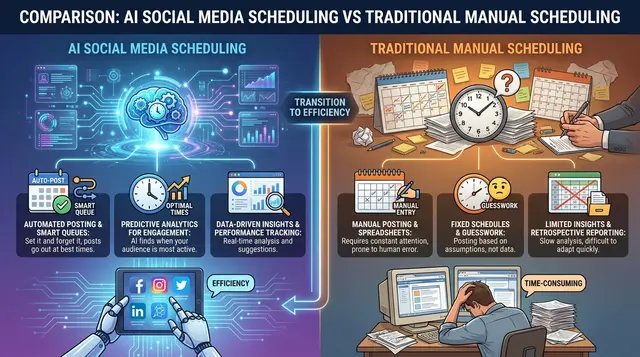
Automation is now foundational in social media marketing. The volume and speed of required content mean that only automated tools can reliably schedule posts across time zones, track trends, and deliver actionable analytics. Visual-first platforms like Instagram and Pinterest require daily, high-quality multimedia posts. Automation allows brands to queue up content, test captions, and optimize timing based on engagement data – while keeping teams from becoming overwhelmed.
Managing multi-channel campaigns – from paid ads to influencer collaborations – also benefits from automation. Tools can unify calendars, monitor sentiment, and flag anomalies in real time. This enables brands to respond to customer inquiries at any hour or pivot strategy when trends shift. Still, automation must be balanced: overuse can make brands sound generic. The most successful strategies use automation for efficiency, but keep genuine interaction at the forefront.
| Platform | Key Automation Opportunities | Risks to Authenticity |
|---|---|---|
| Automated post scheduling, real-time ad optimization, instant replies | Overused canned responses can feel impersonal | |
| Bulk image/video uploads, story scheduling, AI-generated captions | Template-driven visuals may blend in with competitors | |
| X (formerly Twitter) | Thread scheduling, trend monitoring, automated replies | Generic replies during sensitive news cycles can backfire |
| Auto-publishing articles, analytics-driven timing | Automated outreach may weaken relationship-building | |
| Automated pinning, content recycling, analytics alerts | Repetitive content can reduce perceived creativity |
In 2026, automation sets the baseline for brands aiming to stay visible and responsive. Manual management alone is inefficient and risks falling behind.
Authenticity: The New Gold Standard in Social Media Marketing
Key Insight: Audiences in 2026 reward brands that communicate with vulnerability, consistency, and a genuine human voice – and tune out those relying on generic messaging.
How Audiences Define Authenticity
Authenticity is now a clear expectation. Audiences can tell when a brand shares real stories versus carefully crafted, impersonal updates. They look for concrete signals: Does the brand admit mistakes? Are responses personalized? Do posts reflect the people behind the company, or does everything feel templated?
Consumers want relatability. They respond to brands that own their opinions, share imperfect moments, and speak in a distinct voice. A feed full of corporate jargon and curated visuals is easy to ignore. What stands out are authentic interactions – like a founder answering tough questions or a brand responding to feedback with empathy.
Why Authenticity Drives Engagement
Authentic content stands out. When brands show up with consistency and vulnerability, they build real connections – something automation alone can’t replicate. Social media can drive a lot of reach, but reach means little without trust. Audiences quickly scroll past formulaic posts. In contrast, content that reveals personality or acknowledges feedback earns higher engagement and loyalty.
Loyalty is built on more than clever captions or visuals. It depends on the sense that someone real is listening and responding. Brands using automation for planning and scheduling still need to inject a human touch. Automated workflows can handle the routine, but relationship-building requires honest, sometimes imperfect, communication. In a crowded field, authenticity is the edge that sets lasting brands apart.
The False Choice: Why Brands Don’t Need to Pick Between Automation and Authenticity
The Hybrid Model: Strategic Blending Is Essential
Many brands treat automation and authenticity as opposites. In reality, these qualities can coexist. You can have efficient workflows alongside genuine connection when both are managed with intention.
AI tools excel at scheduling, analytics, and content planning. They free up time and surface insights, allowing teams to focus on real interactions and creative storytelling. But automation alone isn’t enough. The key is strategic human oversight. A strong program automates routine tasks while ensuring all engagement and tone reflect your brand voice.
The best social media marketing teams use automation for consistency and speed, then layer in personal touches – a tailored reply, a behind-the-scenes video, or thoughtful commentary on trends. This hybrid approach delivers both scale and sincerity. Rather than choosing sides, prioritize a model that lets technology handle the repetitive work, while reserving meaningful moments for human interaction.
What Should Be Automated (And What Should Never Be)
The Automation Sweet Spot: Where Automation Improves Quality or Speed
Social media marketing at scale isn’t possible without some automation. The key is knowing which activities benefit most from AI-powered tools – and where human input is essential.
Content scheduling is an obvious candidate. Scheduling tools let you plan campaigns across platforms and ensure posts go live at the right time, even when you’re offline. Automation also excels in analytics. AI dashboards distill large data sets into actionable insights, helping you track engagement and growth far faster than manual methods.
Routine moderation – filtering spam, flagging inappropriate comments, and triaging support tickets – works well with automation. These repetitive tasks can be handled quickly and consistently by software, freeing up time for higher-value work. When implemented thoughtfully, automation in these areas amplifies your impact while maintaining authenticity.
Where Human Touch Is Irreplaceable
Some aspects of social media marketing can’t be left to algorithms. Community engagement is a prime example: answering nuanced questions, responding to feedback, and nurturing conversations require judgment and empathy. Audiences notice the difference between a canned reply and a thoughtful, human answer.
Crisis response also demands human oversight. When a brand faces criticism or a sensitive issue, generic automated replies can make things worse. Only a real person can gauge sentiment and craft messaging that de-escalates rather than inflames. The same goes for nuanced messaging around brand values or cultural moments – these require context that automation can’t match.
Successful brands use automation for repetitive work, reserving key moments for genuine connection. The table below offers a practical framework for deciding what to automate and what to humanize.
| Social Media Task | Best Approach | Rationale |
|---|---|---|
| Content Scheduling | Automate | Ensures posts go out at optimal times, reduces manual workload. |
| Analytics & Performance Tracking | Automate | Aggregates and analyzes data faster, enabling quicker strategy shifts. |
| Routine Moderation (Spam/Profanity Filtering) | Automate | Removes obvious spam or harmful content quickly, freeing up human moderators. |
| Community Engagement (Replies, DMs) | Humanize | Builds trust through authentic, context-aware conversations. |
| Crisis Management | Humanize | Requires empathy and nuanced response – automation falls short here. |
| Nuanced Brand Messaging | Humanize | Storytelling and value communication need real understanding of audience sentiment. |
Balancing automation and human input is now a competitive necessity as audiences expect both speed and authenticity from the brands they follow.
The Role of Human Oversight: Making Automation Work for Your Brand
Automated tools give brands a significant advantage in social media marketing, handling everything from caption suggestions to scheduling. But for automation to support your brand – not undermine it – strategic human oversight is essential. Even advanced AI can miss cultural context or subtle shifts in tone that only a real person can catch.
Build in regular reviews of AI-generated content. Don’t just scan the calendar before posts go live. Check for brand voice alignment, accuracy, and relevance to your audience. Automated captions can save time, but a quick human edit often turns a generic post into something that connects.
Set escalation protocols for sensitive or high-impact situations. For example, if social listening flags a spike in negative comments or a trending topic tied to your brand, ensure these are routed to a human for review before any automated response goes out. This protects your reputation and allows for genuine engagement when it matters most.
Human-in-the-Loop Systems: Structuring Oversight
The most resilient brands are adopting human-in-the-loop systems – structures where people approve, edit, or intervene at key points in the workflow. This could mean requiring manager approval for scheduled posts tied to product launches, or triggering manual review for AI-generated replies on high-priority accounts.
Make your process explicit. Define which posts require human sign-off, when auto-responses are paused, and how reviewer feedback is incorporated. Treat oversight as a continuous improvement loop: audit automated outputs, adjust system settings, and optimize based on real outcomes. A thoughtful oversight system gives you the confidence to scale while keeping your brand’s unique voice at the forefront.
Before and After: Real-World Impact of Balancing Automation and Authenticity
Content Cadence and Engagement: From Rigid to Responsive
| Before: All-Manual or All-Automated | After: Balanced Approach |
|---|---|
| Content Cadence: Posts go out sporadically (all-manual), or at perfectly regular but uninspired intervals (all-automated). Example: “Happy Friday! #TGIF” appears every week, regardless of audience interest or trends. | Content Cadence: Consistent scheduling, with flexibility to join real-time conversations or viral moments. Example: A planned campaign runs, but a human jumps in with a personalized reply when a customer shares a creative product use, highlighting community stories. |
| Brand Perception: Feels generic or robotic. Followers spot recycled captions and tune out. Engagement: Low interaction, with likes and replies declining. | Brand Perception: Feels relatable and real. Followers see authentic replies and contextually relevant content. Engagement: Higher, as customers share posts and respond to timely prompts. |
Why the Improved Approach Works
When brands combine automation for efficiency with human judgment for context, the result is a social media marketing workflow that scales while preserving authenticity. AI tools handle scheduling and analytics, freeing up time for marketers to craft real responses and seize opportunities as they arise. This balance drives both customer sentiment and operational efficiency – keeping brands visible and relatable.
Common Pitfalls: How Over-Automation Can Undermine Social Media Marketing
The Hidden Risks of Relying Too Much on Automation
Social media marketing thrives on connection, but over-automation can erode the qualities that make a brand relatable. When every reply is a template and posts go live without context, the result is often impersonal communication and a loss of brand personality. Followers notice when interactions feel sterile, especially during sensitive moments. Automated messages sent during a crisis – without human judgment – can escalate issues instead of resolving them.
Warning signs aren’t always subtle. If you see a sudden drop in engagement, negative sentiment in comments, or a churn in followers, your approach may need adjustment. Automated scheduling that ignores local events or cultural sensitivities can make the brand appear tone-deaf. And when real engagement opportunities – like thoughtful replies or timely support – are missed, loyalty suffers.
| Risk Signal | Example | Remediation Step |
|---|---|---|
| Impersonal Replies | Automated “Thanks for reaching out!” to unique customer complaints | Review and personalize responses for high-value interactions |
| Tone-Deaf Scheduling | Promoting products during sensitive news events | Monitor current events and adjust campaigns as needed |
| Missed Engagement Opportunities | No response to thoughtful follower questions | Implement human oversight for community management |
| Drop in Engagement | Decline in likes, shares, and comments after automating posts | Reintroduce manual posting for key content, test engagement rates |
| Negative Sentiment Spike | Increase in critical comments or brand mentions | Conduct sentiment analysis and adapt messaging style or cadence |
| Follower Churn | Noticeable loss of followers over a short period | Audit recent automated content, restore authentic brand voice |
Balancing automation with genuine interaction is essential. By staying alert to these warning signs and intervening early, brands protect the trust and relatability that drive long-term success in social media marketing.
Addressing the Strongest Counterpoint: Isn’t Automation Always a Shortcut to Mediocrity?
The Truth: Not All Automation Is Equal
Skeptics argue that automation in social media marketing leads to generic content. In reality, outcomes depend on how brands use automation – and why. There’s a difference between mindless scheduling and strategic augmentation that supports creativity and connection.
Intent, Oversight, and Configuration Matter
Poorly managed automation produces repetitive posts and canned replies. But when teams set clear goals, maintain oversight, and configure tools with intention, automation can enrich engagement. For example, leading brands use AI-driven analytics to spot trending topics or optimal post times, then layer in authentic, timely responses that reflect their voice and values. These companies don’t let the tech run the show – they guide it.
Brands Raising the Bar
Some of the most effective campaigns blend automation with a human touch. Brands that excel consistently monitor performance data, schedule high-quality visual content, and engage directly with their communities. This mix enables them to reach broad audiences while maintaining authenticity. It’s not automation that leads to mediocrity, but unthinking automation. The best results come from brands willing to use new tools with discernment and creativity.
Strategic Implications for 2026: How Brands Can Future-Proof Their Social Media Marketing
Adopting a People-First, Tech-Enabled Philosophy
The social media marketing environment in 2026 is defined by one principle: authenticity now sits alongside reach and engagement as a core KPI. Audiences, saturated with content, respond to brands that feel real – whether you’re a global retailer or a local startup. Make authenticity measurable. Track not just what’s posted, but how your voice resonates with your audience. This means prioritizing human-centric metrics and feedback, not just impressions and clicks.
AI is indispensable for scale, especially with billions of people on social platforms. The nuance: use AI and automation for efficiency and insight – not as a substitute for real connection. Let tools handle repetitive scheduling, suggest optimal post timings, and surface trends. Then, invest your time in genuine conversations, thoughtful replies, and content that feels personal.
Revisit and Evolve Your Automation Playbook
Platform algorithms, consumer preferences, and social norms keep shifting. Regularly audit your automation strategies to ensure your brand doesn’t sound like a bot or fall behind new engagement patterns. Use analytics to spot where automation works – and where the human touch is irreplaceable. In 2026, future-proofing social media marketing isn’t about chasing every new tool. It’s about staying focused on real connection, even as technology evolves.
Frequently Asked Questions
How can brands automate social media marketing without losing their authentic voice?
Automate routine tasks like scheduling and analytics, but review automated content for brand voice and personalize key interactions. Human oversight ensures authenticity is preserved.
Which social media tasks are best suited for automation?
Content scheduling, analytics, and routine moderation are ideal for automation. These free up time for teams to focus on strategy and genuine engagement.
How do you measure authenticity in social media content?
Look at audience engagement, feedback, and sentiment. Personalized interactions and storytelling that reflect your brand’s unique voice are strong indicators of authenticity.
What are the main risks of over-automating social media?
Over-automation can lead to impersonal communication, loss of brand personality, and missed engagement opportunities. Balancing automation with human oversight is key.
How often should brands review their automated social media workflows?
Audit automated workflows regularly – ideally every quarter – to ensure alignment with strategy and audience expectations. This helps you adapt to changes in platforms and consumer behavior.
Can AI-generated content ever feel truly authentic?
AI-generated content can feel authentic if used thoughtfully, with human oversight to ensure alignment with brand voice and values. Personalization and context-aware edits are essential.
What’s the role of human oversight in social media automation?
Human oversight ensures automated processes reflect brand values and audience expectations. It involves reviewing content for accuracy, context, and tone, and intervening in sensitive situations.
Powered by PostNext service
Sources
- DataReportal, “Global social media statistics” (5.79 billion social media user identities, April 2026): https://datareportal.com/social-media-users