Key Takeaways
AI-Powered Verification is Now Essential
Influencer verification has become a critical safeguard for brands as influencer fraud remains a persistent threat. With approximately 25% of influencers reportedly buying fake followers, brands face real risks of wasted budgets and reputational harm. AI verification tools now serve as a frontline defense, confirming identity, audience authenticity, and engagement quality before any partnership begins.
Prioritizing Authenticity Over Vanity Metrics
Brands can no longer rely on raw follower counts or polished profiles. What matters is audience quality – are followers real, reachable, and engaged? Modern verification examines nuanced metrics such as comment authenticity, growth integrity, and audience relevance. This shift helps marketers avoid overpaying for inflated reach and instead invest in creators who genuinely influence their audiences.
Integrated Tools and Transparent Outputs
Leading verification solutions – whether specialist audit tools or all-in-one suites – fit directly into social media workflows. They provide clear, defensible outputs that help marketers explain decisions to internal teams. For managers already using automation platforms such as PostNext, integration of verification data is now a baseline expectation, reflecting a broader trend across top agency-focused platforms.
Continuous Vigilance is Required
No tool, regardless of sophistication, guarantees 100% accuracy. Fraudsters adapt, and AI-generated fake engagement becomes more advanced each year. Even with strong verification, ongoing monitoring and post-campaign analysis are essential to catch emerging red flags. For more on automated monitoring in social media, see this guide on automated social media alerts.
The bottom line: influencer verification is fundamental for protecting marketing investments and building credible creator partnerships. As both fraud tactics and verification methods evolve, staying proactive with layered, AI-driven tools is the smartest defense.
AI Disrupts Influencer Verification: What Changed in 2026?
The $1.3 Billion Wake-Up Call
By 2026, influencer fraud has shifted from a minor nuisance to a costly liability. Marketers lose significant amounts annually to fake followers, synthetic engagement, and fraudulent creator accounts. This impact hits marketing budgets hard, especially as influencer spending continues to grow. Even a single misstep with an unvetted influencer can result in wasted spend, reputational damage, and difficult questions from leadership.
What’s changed? AI-powered influencer verification now sits at the core of most serious influencer programs. It’s a direct response to the escalation in fraud – an arms race where bots and fake engagement tactics become more sophisticated each quarter. As a result, companies have moved beyond surface-level checks and are doubling down on data-driven vetting to protect their investments.
AI Defenses Go Mainstream
A few years ago, teams might have evaluated an influencer by follower count and a quick look at engagement. That approach is obsolete. Modern influencer verification focuses on signals like audience quality, growth integrity, and engagement authenticity. Tools such as HypeAuditor, Modash, and CreatorIQ have set new standards for audit and verification at scale, analyzing millions of creator profiles for signs of fraudulent activity.
The distinction matters: discovery platforms help brands find creators, but it’s verification that protects budgets. Marketers now demand audit tools that produce clear, defensible outputs for internal review. Vanity metrics have lost their influence, replaced by metrics that measure whether an audience is genuine and likely to deliver real ROI. For a practical breakdown of meaningful metrics, see our guide to efficiency metrics in social media management.
From Vanity to Vigilance
This shift has also changed agency workflows. Teams now routinely combine specialist tools with platform-native badges to verify both identity and engagement. Instagram and TikTok, for example, have upgraded their verification processes beyond blue checkmarks – requiring not just a follower threshold but also proof of authentic engagement and identity.
For brands and agencies, the message is clear: influencer verification is essential. It plays a central role in protecting budgets and maintaining trust. As fraud tactics and bots adapt, AI-powered defenses will remain central to keeping influencer partnerships credible and campaigns effective. To see how automation and analytics can further streamline these processes, explore our recent comparison of AI analytics platforms for influencer campaigns.
Why Influencer Verification Moved Beyond Follower Counts
From Follower Counts to Audience Quality Scores
For years, marketers leaned heavily on follower counts as the gold standard for evaluating influencer value. The logic was simple: bigger audience, bigger impact. But this approach led to costly mistakes, as many influencers bought fake followers, resulting in brands paying premium rates for hollow reach and synthetic engagement. This overreliance on surface-level metrics has contributed to substantial fraud-related losses.
The rise of AI-powered verification tools changed the equation. Instead of focusing on numbers that can be easily manipulated, modern influencer verification now scrutinizes a mix of signals – audience quality, growth integrity, comment authenticity, and real engagement. Brands increasingly turn to platforms offering audit functions, such as HypeAuditor’s fraud detection or Modash’s cross-platform discovery with embedded verification, to avoid pouring money into fake audiences.
What matters is not just how many people follow, but who those people are, how they interact, and whether the influencer’s audience truly aligns with your goals. With more scrutiny from finance and legal teams, marketers now need defensible, data-driven influencer selection that can be explained internally and withstand external audit. If you’re serious about maximizing ROI, raw follower numbers just aren’t enough. For a deeper look at the risks of automation and the importance of authentic metrics, see our detailed post on automation mistakes that harm social media engagement.
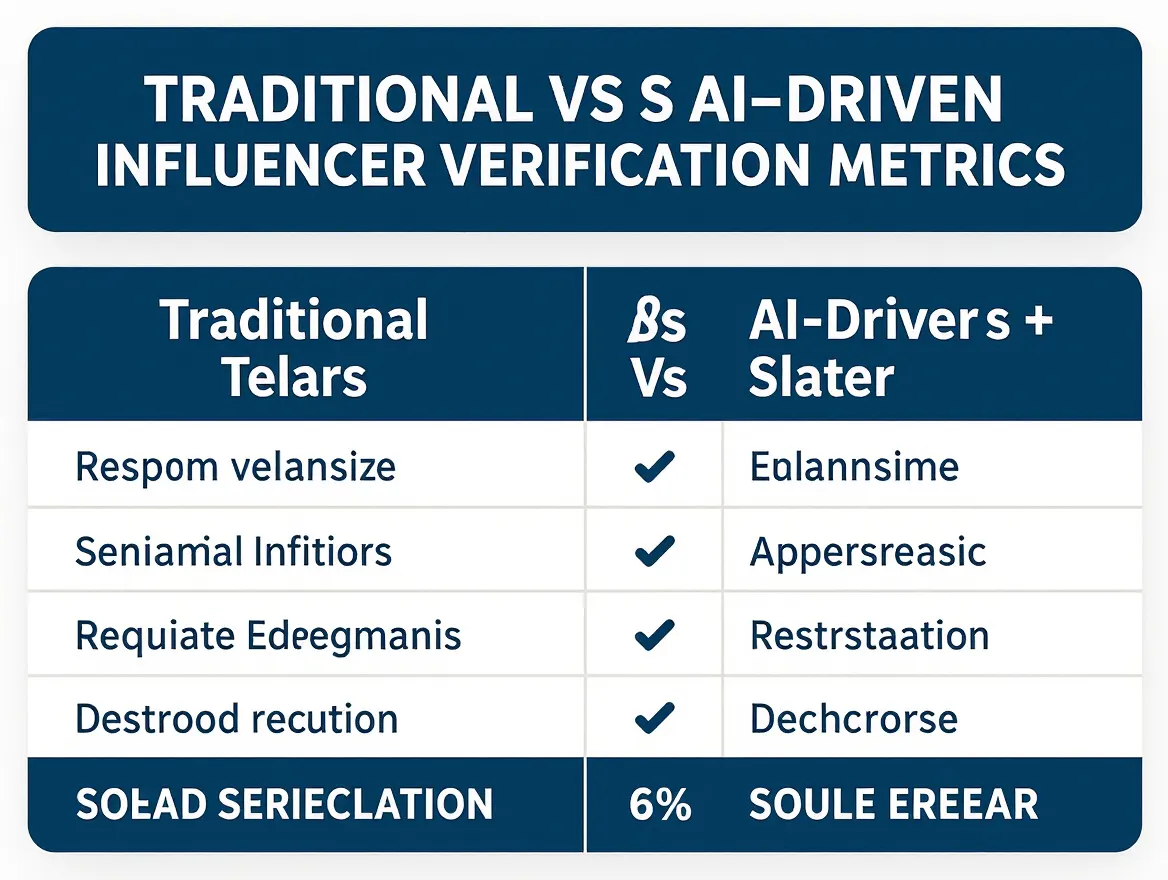
| Verification Metric | Old Approach | AI-Driven Approach |
|---|---|---|
| Audience Size | Raw follower count | Weighted by active, real followers after bot/purchase filter |
| Engagement Rate | Likes and comments per post | Authentic engagement analysis (bot/spam detection, real comment scanning) |
| Growth Integrity | Ignored or assumed organic | Growth pattern analysis to flag sudden, suspicious spikes |
| Comment Authenticity | Volume of comments | AI review for copy-paste, irrelevant, or bot-generated comments |
| Audience Demographics | Rarely considered | Mapped to brand’s target segments for relevance |
Key Insight: The real value of influencer verification lies in measuring who engages and how authentically, not just how many follow.
Before/After: Campaign Results with and without Verification
Old influencer selection methods often led to disappointing outcomes. Here’s a clear example contrasting results before and after integrating AI verification into a campaign workflow:
| Before | After |
|---|---|
| Brand partners with an influencer boasting a large follower count and a high like count. Campaign yields a spike in impressions, but low click-through and near-zero conversions. Post-campaign audit reveals a significant portion of the audience was bots or inactive accounts. | Brand uses AI-driven verification to select an influencer with a smaller but more authentic and engaged follower base. Campaign generates above-average engagement, click-through, and measurable conversions. Audience analysis confirms alignment with target demographics. |
Why the “after” works: AI filters out fake engagement and ensures the influencer’s audience is both genuine and relevant. Better verification means real reach, credible results, and a stronger brand-creator relationship. For marketers aiming to scale this approach, refer to our comparison of AI analytics platforms for influencers to see how different tools support deep audience insights.
As social media fraud grows more sophisticated, the shift to data-driven influencer verification is no longer optional – it’s essential for brands seeking authentic impact and sustainable partnerships.
AI Technologies Powering Influencer Verification in 2026
Most marketers recognize that influencer verification is no longer a box-ticking exercise. Today’s verification tools rely on a mix of machine learning, natural language processing (NLP), and advanced bot detection to keep up with increasingly sophisticated fraud tactics. Here’s how these AI technologies break down the signals that separate genuine creators from those propped up by fake followers and synthetic engagement.
| AI Technology | Verification Function | Key Benefit |
|---|---|---|
| Machine Learning | Detects abnormal spikes in followers, likes, and comments | Flags suspicious growth for manual review, reducing wasted spend on fraudulent accounts |
| Natural Language Processing (NLP) | Analyzes comment authenticity and engagement patterns | Identifies genuine vs. auto-generated comments, enabling smarter campaign choices |
| Bot Detection Algorithms | Discovers non-human behaviors and synthetic engagement | Prevents bot-driven inflation of metrics, supporting accurate performance forecasting |
| Audience Quality Scoring Models | Rates real audience reach and relevance, not just volume | Helps brands choose influencers with engaged, authentic communities |
Key Insight: The strength of AI-powered influencer verification is its ability to identify subtle patterns of fraud that human reviewers often miss, raising the standard for trustworthy creator partnerships.
Machine Learning for Pattern Recognition
Machine learning is now central to modern influencer verification. Rather than relying on static rules, these models ingest historical data – follower counts, engagement rates, post timing – and learn what “normal” looks like for different types of creators. If an account suddenly gains a large number of followers overnight without a clear cause, algorithms flag the anomaly. Similarly, if like and comment rates spike far beyond an account’s baseline, the tool prompts a closer audit.
Platforms such as HypeAuditor and Modash are recognized for their performance in this area. This precision is possible because machine learning models constantly retrain on new behavioral data, adjusting for emerging fraud tactics. The result is fewer false positives, quicker detection of suspicious activity, and less wasted budget on accounts with inflated metrics. For teams using all-in-one solutions like PostNext, these anomaly detection features integrate directly into regular workflows.
For a deeper look at how AI analytics shape influencer strategy, this comparison of analytics platforms breaks down the strengths of leading tools in the market.
NLP and Comment Analysis
Machine learning alone can’t determine if an influencer’s audience actually cares about their content. That’s where natural language processing comes in. NLP algorithms scan thousands of comments to assess authenticity at scale – flagging generic, repetitive phrases, copy-pasted responses, or suspicious comment patterns that indicate bot involvement.
Advanced NLP models go further, recognizing context and sentiment. Authentic comments reference specific details from a post, include questions, or show follow-up engagement over time. By distinguishing real conversations from automated noise, brands get a true measure of audience quality and engagement. This is increasingly important as AI-generated comments become more sophisticated and harder to spot manually.
For social media managers prioritizing accuracy and efficiency, AI-driven comment analysis is now a baseline feature in leading influencer marketing and automation platforms. It’s also changing how teams evaluate campaign ROI – no longer just counting comments, but qualifying their impact. To see how this fits into broader content planning, review the latest guide on AI tools for social media planning.
Bot and Fake Follower Detection
With approximately 25% of influencers reportedly buying fake followers, bot detection is a necessity. Today’s AI-powered systems use a combination of behavioral analysis (posting times, engagement patterns, follower churn) and network analysis (follower/following relationships) to spot non-human behaviors and audience manipulation efforts.
Techniques like device fingerprinting and cross-platform activity mapping help identify coordinated botnets that can otherwise evade manual review. These detection layers not only protect brands from fraud – they also reinforce trust in the creator ecosystem. However, as bots become smarter, detection must evolve just as quickly. No system is perfect, but the bar for authenticity is rising.
As influencer verification grows more sophisticated, marketers must stay informed and adapt their strategies to keep pace with changing threats and verification standards.
How Leading Verification Tools Compare in 2026
Specialist Audit Tools
Specialist audit tools have become essential for brands determined to minimize the risk of influencer fraud and protect campaign budgets. HypeAuditor, for example, detects 95.5% of known fraudulent activity. These platforms focus on the granular details that expose fake followers, bot-driven engagement, and inflated reach.
Where many brands once relied on surface-level metrics, top audit tools evaluate audience quality scores, growth integrity, and engagement authenticity. Modash analyzes millions of creator profiles with automated checks for comment authenticity, suspicious growth spikes, and follower origin. This level of rigor makes specialist audit tools an indispensable checkpoint before negotiating contracts or allocating budget.
One limitation: these tools are often standalone and may not provide the end-to-end workflow support that larger influencer campaigns require. Still, for teams prioritizing defensible verification and fraud prevention, audit specialists deliver a level of scrutiny that generalist platforms can’t match.
For more on how automation is shaping fraud detection and privacy, see Social Media Automation: Privacy First in 2026.
All-in-One Creator Management Platforms
While audit tools focus on fraud, all-in-one creator management platforms are built to streamline every stage of influencer collaboration. Suites like CreatorIQ, GRIN, and Upfluence combine influencer discovery, relationship management, campaign tracking, and integrated verification. These platforms offer a single source of truth – a necessity for enterprise teams managing multi-brand or multi-market influencer programs.
CreatorIQ stands out for enterprise-grade governance, including customizable verification workflows and granular performance analytics. GRIN’s strength lies in workflow automation and relationship management, making it a favorite for brands seeking ongoing partnerships. Upfluence balances e-commerce integrations with audit capabilities, supporting brands that want product seeding and sales tracking alongside verification.
All-in-ones rarely match the detection rates of specialist tools but compensate with workflow compatibility, team collaboration, and integrated data. They’re suited for marketers who want a holistic view – discovery, vetting, activation, and reporting – without toggling between multiple apps.
If you’re building a high-performance workflow for a large team, this guide on scalable social media workflows covers strategies for integrating creator management platforms.
Integration with Social Media Scheduling Suites
The real leap in influencer verification comes when verification tools connect directly with social media scheduling platforms like PostNext. In 2026, the industry expects workflows that allow smooth movement from vetting creators to launching campaigns – without manual exports or data silos.
PostNext, for example, integrates verification layers into its AI-powered scheduling suite. When you import influencer lists, the platform can automatically surface audience quality signals, badge status, and engagement authenticity alongside content scheduling and analytics. This means campaign managers don’t have to toggle between apps or chase down verification screenshots; the vetting data is always at hand when planning or approving posts.
This integration is especially important for agencies and brands running high-volume campaigns across multiple platforms. By connecting influencer verification outputs with scheduling and analytics, teams can make smarter, data-backed decisions at every step: from initial vetting to post-campaign ROI analysis. When a scheduled post is paired with verified engagement metrics, brands gain the confidence to invest more in influencer partnerships – and avoid costly missteps.
No integration can eliminate all risk: AI-generated comments and sophisticated bots are evolving as quickly as detection technology. Teams need ongoing monitoring and a willingness to adapt their verification standards over time. For practical tips on optimizing your scheduling workflow, see these efficiency tips for social media scheduling.
| Tool | Detection Rate | Key Features | Integration Options |
|---|---|---|---|
| HypeAuditor | Detects 95.5% of known fraud | In-depth fraud detection, audience quality scores, comment authenticity checks | API, limited third-party scheduling suite support |
| Modash | High (exact % not public) | Discovery + verification for millions of creators, self-serve audits, bot/fake follower detection | Direct platform integrations, CSV export for manual workflow |
| CreatorIQ | Enterprise-grade (no % published) | End-to-end creator management, customizable verification, granular analytics | Native integrations with scheduling tools, strong API |
| GRIN | Workflow-focused | Relationship management, workflow automation, integrated verification reports | Integrates with Shopify, email, and select scheduling platforms |
| Upfluence | Balanced (audit + commerce) | E-commerce integrations, influencer audit, product seeding support | API, connects to e-commerce and some scheduling apps |
| PostNext | N/A (workflow focus) | AI-powered scheduling, verification data overlays, analytics | Direct integration of verification outputs with scheduling suite |
Key Insight: The most effective influencer verification strategy in 2026 combines rigorous detection tools with workflow-centric platforms, ensuring authenticity checks are built into every stage of campaign planning and execution.
Choosing the right verification tool is no longer just about fraud detection; it’s about how well that tool fits into your content planning and publishing pipeline. As influencer marketing budgets grow, brands that blend specialist rigor with workflow efficiency are best positioned to earn real, measurable returns from their creator partnerships.
Influencer Verification on Social Media Platforms: Badges, Benchmarks, and Beyond
Platform-Specific Verification Criteria
Instagram and TikTok have fundamentally changed what it takes to earn a verification badge. Gone are the days when a blue checkmark simply meant a high follower count. In 2026, these platforms demand a blend of identity documentation, proven engagement, and often, newsworthiness or public interest. Instagram typically asks for official ID, evidence of recent press coverage, and a solid engagement rate – usually above industry averages. TikTok’s process is more opaque, but consistent, high-quality video performance and a clear, authentic content style are essential, alongside documented identity.
Other platforms take their own approach. X (formerly Twitter) has added layers of paid subscription and regular activity requirements. YouTube verifies creators who maintain a minimum subscriber threshold and adhere to strict copyright compliance. Across the board, engagement authenticity is now as important as reach. Platforms use audience quality scores, checking for non-bot followers and authentic interaction, as a gatekeeper for verification. This shift helps protect brands from fraud that has long plagued influencer marketing.
For creators, these evolving benchmarks mean that simply amassing followers or producing viral moments isn’t enough. Today’s influencer verification process scrutinizes real audience connection, requiring influencers to provide documentation and demonstrate sustained, authentic engagement. This trend is accelerating as AI tools make it easier to spot fake accounts and manipulated metrics, reinforcing the necessity of strong verification standards. For an in-depth look at how platforms and brands are using automation to reinforce authenticity, see this analysis of automation features that boost engagement.
Impact on Brand-Influencer Partnerships
Verified status now has a tangible impact on both algorithmic reach and brand trust. Social platforms prioritize content from verified creators, surfacing their posts in Explore and For You feeds more frequently. This algorithmic boost translates directly into higher visibility, making the verification badge a practical asset, not just a status symbol.
For brands, a verified badge is a key indicator that an influencer’s audience is both real and reachable. Increasingly, marketers require verification as part of their partnership vetting process, recognizing that it filters out fake followers and inflated engagement. This extra layer of trust helps protect marketing budgets from being wasted on fraudulent accounts – a risk that remains significant, as a notable portion of influencers have purchased fake followers.
Platforms are also integrating these signals into their own creator marketplaces and API-accessible data streams, enabling social media automation tools like PostNext to help brands filter for verified partners in campaign planning. That means efficient, data-driven selection is now possible at scale, making cross-platform scheduling tools more valuable than ever. For more context on how automation and analytics are shaping influencer strategy, see this comparison of AI analytics platforms for influencers.
As influencer verification continues to evolve, both creators and brands must stay ahead of changing benchmarks and verification requirements. The platforms’ growing emphasis on engagement authenticity and identity proof puts genuine relationships at the center of influencer marketing – raising the bar for everyone involved in digital collaborations.
Practical Steps for Marketers: Building Verification into Your Workflow
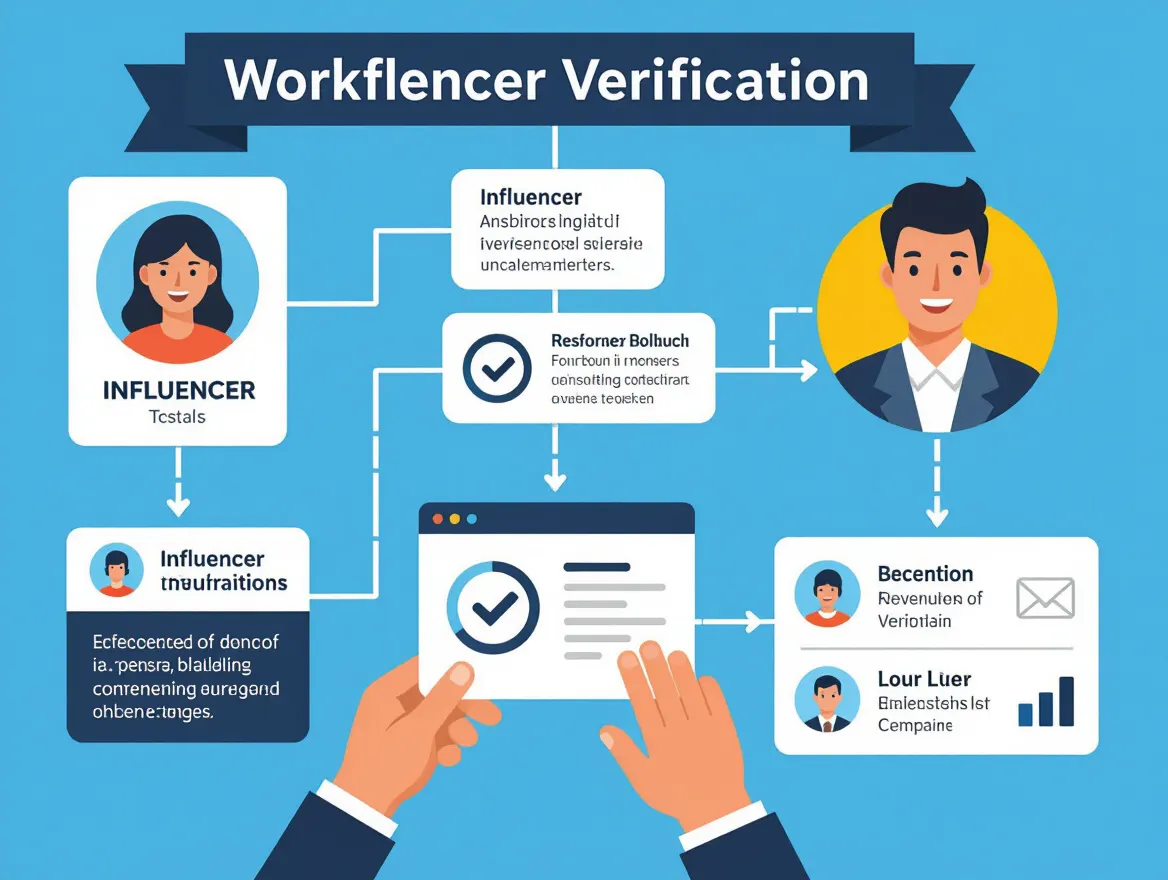
Step 1: Pre-Vetting with Platform Badges and Basic Metrics
Begin influencer verification by screening creators with social platform badges and simple analytics. Instagram, TikTok, and other networks have made their badges more meaningful in 2026 – now, badges signal not just identity, but also minimum engagement and documentation standards. Look for creators with verified status, but do not stop there.
Check basic audience metrics – growth trends, average engagement rates, and follower-to-like ratios – using platform dashboards or integrated analytics from your social media scheduler. Vanity metrics like follower counts are easily manipulated. Instead, favor accounts that show steady, organic growth and consistent interactions. For instance, a creator with a badge, 10,000 followers, and steady engagement is a better starting point than one with 50,000 followers and sporadic likes.
This surface-level screening acts as a filter, saving time and reducing risk before you invest in deeper analysis. If your agency already uses a tool like PostNext for analytics, integrate its verification and engagement signals right at this stage – there’s no reason to rely on manual checks alone.
Step 2: Deep Verification with AI Tools
Once a candidate passes the initial screen, move to a deeper audit using AI-powered tools or creator management suites. The market now offers specialist options such as HypeAuditor, which detects 95.5% of known fraudulent activity, and Modash, which audits authenticity across millions of creators. These tools analyze not just engagement, but the quality of comments, audience origin, and growth integrity.
Here’s where you separate legitimate creators from those using bots or buying fake followers. For example, an AI audit can flag patterns such as sudden follower spikes or suspicious engagement clusters – signals that indicate inorganic activity. Some platforms, like CreatorIQ and Upfluence, also provide easy-to-explain outputs, helping you justify decisions to clients and internal stakeholders by surfacing concrete audience quality scores, not just reach numbers.
Before/After Example:
| Before | After |
|---|---|
| “We chose this influencer because they have over 50,000 followers and a high number of likes on their posts.” | “We selected this creator after an AI audit confirmed a high percentage of their followers are authentic and their average comment quality score exceeds platform benchmarks, indicating a real and engaged audience.” |
The improved “after” version is stronger because it relies on verifiable audience quality and transparent metrics, rather than surface-level reach. This kind of rationale also makes it much easier to defend decisions if a partnership doesn’t deliver as expected.
For agencies juggling multiple campaigns, look for tools that fit well with your reporting needs and workflow. Many platforms now integrate directly with major social media schedulers, making it possible to automate reporting and verification side-by-side.
Step 3: Ongoing Monitoring and Post-Campaign Analysis
Verification is not a one-time box to check. Even after onboarding, keep monitoring influencer performance throughout the campaign. Use AI analytics to flag engagement drops or sudden anomalies – both potential signs of changing authenticity or new fraud tactics.
After a campaign wraps, run a post-campaign analysis focused on engagement quality, audience retention, and conversion rates – not just raw impressions. If your platform or tool supports automated alerts, set thresholds for suspicious activity so you can intervene early. This approach matches the best practices outlined in this guide to avoiding automation mistakes in social media.
Continuous monitoring also helps you maintain long-term credibility and ROI. Influencer fraud is constantly evolving, and so should your verification process.
By integrating influencer verification at every stage – pre-vetting, deep audit, and ongoing monitoring – you protect your brand, your budget, and your reputation in a marketplace where trust is anything but automatic.
Case Example: The ROI Impact of Influencer Verification
The Business Before and After Influencer Verification
For brands scaling their creator partnerships, influencer verification is no longer a nice-to-have. It’s a risk and ROI management necessity. The business impact is best illustrated through a direct comparison of campaign metrics before and after adopting a thorough verification workflow.
| Metric | Before Verification | After Verification |
|---|---|---|
| Average Campaign ROI | Hard to quantify; frequent budget overruns due to fake reach | ROI becomes trackable and defensible; budgets align with real engagement |
| Fraudulent Influencer Spend | Significant waste on fake followers and synthetic engagement | Reduced; fraud detection tools catch most known fake activity |
| Engagement Authenticity | Inflated likes, bot comments, low conversions | Genuine audience interactions produce measurable results |
| Influencer Vetting Time | Manual reviews, inconsistent checks, and unreliable data | Streamlined, with clear, data-backed quality metrics |
| Brand Reputation Risk | One bad partnership can spark public scrutiny or lost trust | Vetting minimizes PR headaches and protects brand credibility |
Before/After Examples: Campaign Selection in Practice
| Before | After |
|---|---|
| “She’s got a large follower count, nice photos, and seems popular. Let’s sign her.” | “Her audience quality score is high, with strong authentic engagement and verified growth. Audience is mostly US-based, aged 25-34, matching our targets.” |
| “We pick whoever shows up on the top of discovery tools.” | “We require all shortlisted creators to pass AI-powered verification – checking for comment authenticity, follower growth integrity, and badge status – before final approval.” |
The after examples demonstrate a defensible, data-backed approach to influencer selection, protecting budget allocation and brand reputation. Brands using verification tools consistently report improved campaign ROI and fewer fraud incidents. As noted in our recent comparison of AI analytics platforms for influencers, the difference is clear once you move from vanity metrics to real quality signals.
Of course, verification is not infallible. Sophisticated bots and evolving fraud tactics mean vigilance is still required, and ongoing post-campaign analysis remains essential. But for brands operating at scale, the case for AI-powered influencer verification is now both practical and financial – and the gap between those who adapt and those who don’t is only widening.
Risks, Limitations, and the Future of Influencer Verification
Limitations of Current AI Verification
AI has changed the field of influencer verification, but no tool can promise 100% accuracy. Even the most respected platforms – like HypeAuditor, with its high fraud detection rate – cannot account for every possible manipulation. Sophisticated fraudsters constantly invent new tactics, from AI-generated comments that mimic authentic engagement to bot networks designed to imitate human behavior. The line between authentic and synthetic is getting blurrier each year.
There are scenarios where even advanced verification tools struggle. For example, micro-influencers with smaller, niche audiences often fall outside the datasets these tools are trained on. AI systems can miss nuanced local engagement patterns, misclassify rapid audience growth, or fail to catch coordinated comment pods. Brands that rely entirely on automation risk overlooking these blind spots. Tools are only as strong as the signals they measure – and fraudsters know which signals to target.
A further challenge: the arms race between detection and deception. With AI-generated personas, deepfaked photos, and increasingly realistic engagement, verification solutions must adapt constantly. This is why ongoing monitoring and multi-layered checks are essential. No system is immune to being outpaced by new fraud methods.
Key Insight: Even the best influencer verification tools are only part of the solution – continuous vigilance and multi-layered review are now non-negotiable for brands that want to minimize risk.
Future Trends: Adaptive AI and Human Oversight
Looking ahead, the future of influencer verification will be defined by adaptability and hybrid strategies. Automated audits can flag suspicious audience spikes, anomalous engagement rates, or mismatched follower geographies in real time. But these systems work best when paired with human expertise. A social media manager can spot context and nuance that algorithms miss: for example, understanding whether a sudden follower jump is the result of a trending campaign or something more suspicious.
Forward-thinking brands are already layering manual review on top of automated checks. They combine platform badges, third-party audit results, and ongoing campaign monitoring to build a defensible case for authenticity. This multi-pronged approach is especially important as fraud tactics evolve. If you’re managing a large influencer roster or agency workflow, it’s worth reviewing how other teams approach this challenge in our comparison of social media automation platforms for agencies.
In 2026 and beyond, expect AI tools to become more context-aware, drawing on richer data sources and incorporating feedback from human analysts. But the fundamental truth remains: no tool is foolproof. The most resilient brands will treat verification as an ongoing process, not a one-time checkbox – building systems that evolve alongside both creators and the threats they face.
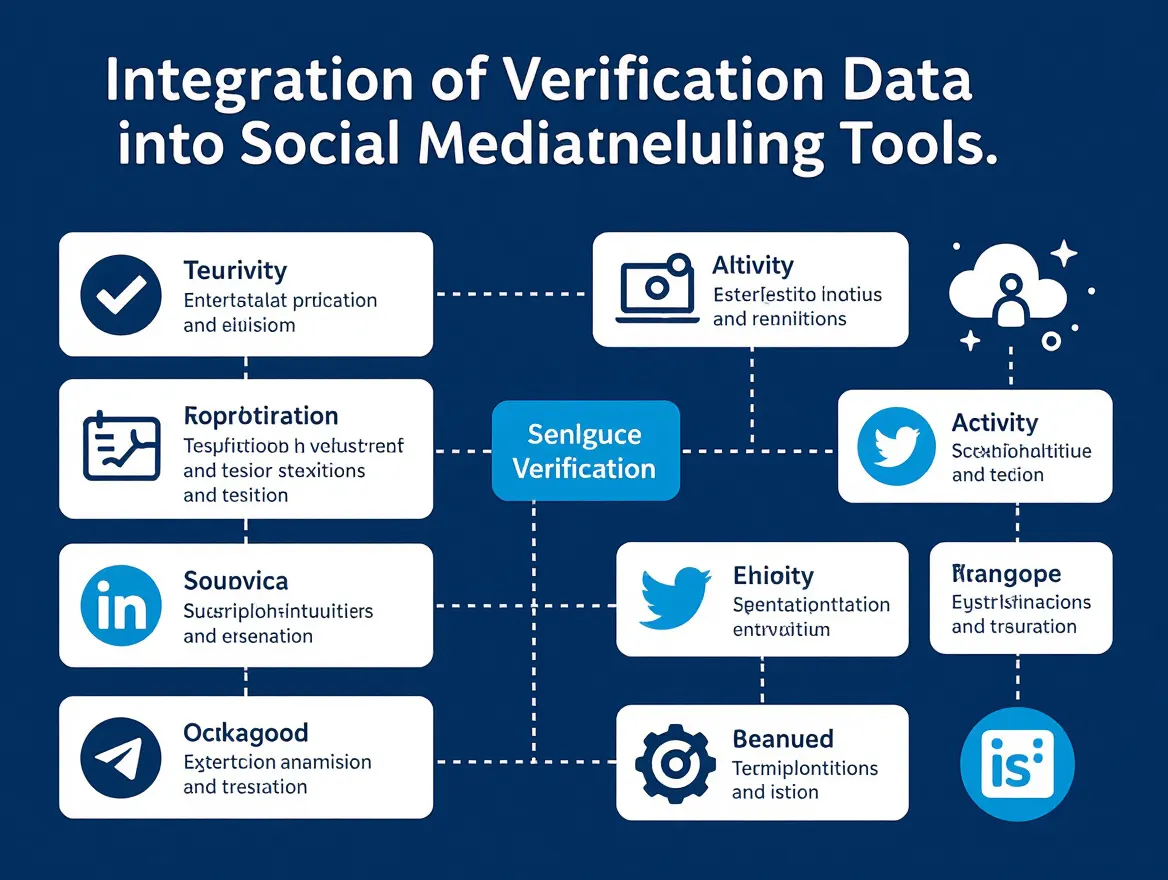
How Influencer Verification Integrates with Social Media Automation
Workflow Automation and Verification
Integrating influencer verification into social media automation platforms fundamentally changes how teams manage campaign planning and execution. Instead of manually cross-checking influencer backgrounds and audience quality, agencies and brands can now pull verified data directly into their automation workflows. This allows teams to schedule posts, coordinate campaigns, and approve influencer content with an added layer of trust – without the tedium of spreadsheet audits or endless back-and-forths.
With modern tools, verified influencer profiles – including metrics like engagement authenticity and audience integrity – are accessible right inside campaign dashboards. This is a significant upgrade from the days when teams worked across disconnected systems, risking costly errors or missing telltale fraud signals. By connecting verification data to your scheduling and approval pipelines, you reduce manual checks and accelerate the pace of collaboration.
PostNext, for instance, brings verification insights into its scheduling and collaboration features, allowing you to automate influencer partnership workflows with greater confidence. This means less time spent vetting and more time crafting high-impact campaigns. If you’re comparing platforms, see this in-depth comparison of social media automation platforms for agencies to understand what integrated verification and automation look like in practice.
The real advantage appears at scale. When managing a dozen or more influencer relationships, integrated verification can eliminate redundant steps and ensure that only authentic, high-quality voices are promoted across your channels. Automation reduces the manual workload while strong verification reduces risk.
Analytics and Reporting for Verified Influencer Campaigns
The impact of influencer verification doesn’t end once content is scheduled. When reporting on campaign results, having reliable verification data in your analytics workflow is essential. Verified audience and engagement metrics ensure that reported reach, conversions, and ROI are grounded in reality – not inflated by bots or fake followers.
Automated analytics platforms like PostNext can ingest verification data as part of their reporting stack. This means your dashboards distinguish between authentic and synthetic engagement, allowing you to spot which creators truly drive results. It also makes post-campaign analysis more actionable: you’re not just looking at raw numbers, but at quality-weighted outcomes.
For managers overseeing multiple campaigns, this approach streamlines routine reporting. Instead of spending hours validating influencer claims, you can generate detailed reports with a few clicks – confident that the numbers reflect genuine audience interaction. For a closer look at how automated reporting integrates verified influencer data, see this guide to automating social media reporting in 2026.
The result: more credible analytics, stronger campaign insights, and a clear line of sight from verification to ROI. This integrated approach frees up strategic bandwidth for creative planning and relationship building, rather than endless data cleanup or risk management.
Resources and Further Reading
Deepen Your Understanding of Influencer Verification in 2026
For a closer look at the essentials of AI analytics in influencer marketing, explore our detailed comparison: AI Social Media Analytics Platforms for Influencers: A 2026 Comparison of PostNext vs. Top Alternatives. This guide breaks down how leading tools evaluate engagement authenticity, audience quality, and fraud risk – critical components of effective influencer verification.
If your team is weighing automation’s role in your verification workflow, don’t miss Social Media Automation: Privacy First in 2026. It covers how automated vetting intersects with privacy and data integrity, especially as AI-driven validation becomes the standard.
For a balanced view on automation’s pitfalls, see Risks of Over-Automation in Social Media Marketing. This piece highlights why blending automation with human oversight remains essential for safeguarding your brand and influencer collaborations.
Staying current with the latest tools and best practices ensures your influencer verification processes keep pace with the evolving risks and opportunities in digital marketing.
Frequently Asked Questions
What is influencer verification, and why does it matter in 2026?
Influencer verification is the process of confirming an influencer’s identity, account ownership, and the authenticity of their audience and engagement. With influencer fraud costing marketers an estimated $1.3 billion annually and approximately 25% of influencers reportedly buying fake followers, brands can’t afford to skip verification. In 2026, as influencer marketing spend rises and AI-generated fake engagement proliferates, strong verification is essential for protecting budgets and reputation.
How do AI tools help with influencer verification?
AI-powered verification tools analyze signals such as audience quality, growth patterns, and comment authenticity. Unlike manual checks, these systems can flag suspicious spikes in followers, detect patterns of fake engagement, and distinguish between genuine and automated comments. Tools like HypeAuditor and Modash scan millions of accounts, surfacing nuanced indicators that go well beyond vanity metrics.
What’s the difference between discovery platforms and verification tools?
Discovery platforms help brands find potential creators based on factors like niche, reach, or audience demographics. Verification tools confirm whether those creators have real, engaged audiences and authentic engagement. Both are critical, but verification specifically reduces the risk of fraud before contracts are signed or budgets are committed. For a deeper look at how these categories compare, see our comparison of AI social media analytics platforms for influencers.
Are platform-based verification badges enough?
No. While Instagram and TikTok badges signal verified status – often requiring follower thresholds and identity checks – badges alone don’t guarantee engagement authenticity or protect against sophisticated fraud. Many brands combine platform badges with specialist audit tools to ensure comprehensive verification.
What are the most reliable signals of a real influencer audience?
Look for engagement authenticity (genuine, context-rich comments), audience quality scores, and consistent growth patterns. Follower count matters less in 2026 than audience integrity, which is best measured by specialized verification platforms. Avoid relying on surface-level metrics that can be easily manipulated.
Can influencer verification eliminate fraud entirely?
Not completely. Verification tools are sophisticated, but not infallible. As AI-generated engagement evolves, no tool can promise perfect accuracy. Brands should include ongoing monitoring and post-campaign analysis as part of a broader risk management strategy. Insights on avoiding over-automation mistakes in social media campaigns are covered in this detailed guide.
How should brands integrate influencer verification into their workflow?
Build verification into the initial vetting stage, use a mix of specialist audit tools and platform-based checks, and focus on clear, defensible outputs when presenting results to stakeholders. It’s smart to choose solutions that fit with your existing social media automation and scheduling stack. For actionable workflow tips, see our guide to building high-performance social media workflows.
In 2026, influencer verification is a non-negotiable step for any brand serious about results and reputation. As AI and fraud tactics keep evolving, a layered, data-driven approach remains the best defense.
Authored with PostNext