Social media for florists works best on a calendar that starts weeks before each flower holiday. People order flowers on short notice, but they decide where to order long before. This PostNext guide covers which channels to use, six posts that bring orders all year, and a week-by-week posting plan for Valentine’s Day and Mother’s Day, the busiest days of the florist year.
Key Takeaways
- Two holidays carry the year: the Society of American Florists’ holiday ranking puts Valentine’s Day at 30% of holiday flower purchases and Mother’s Day at 26%.
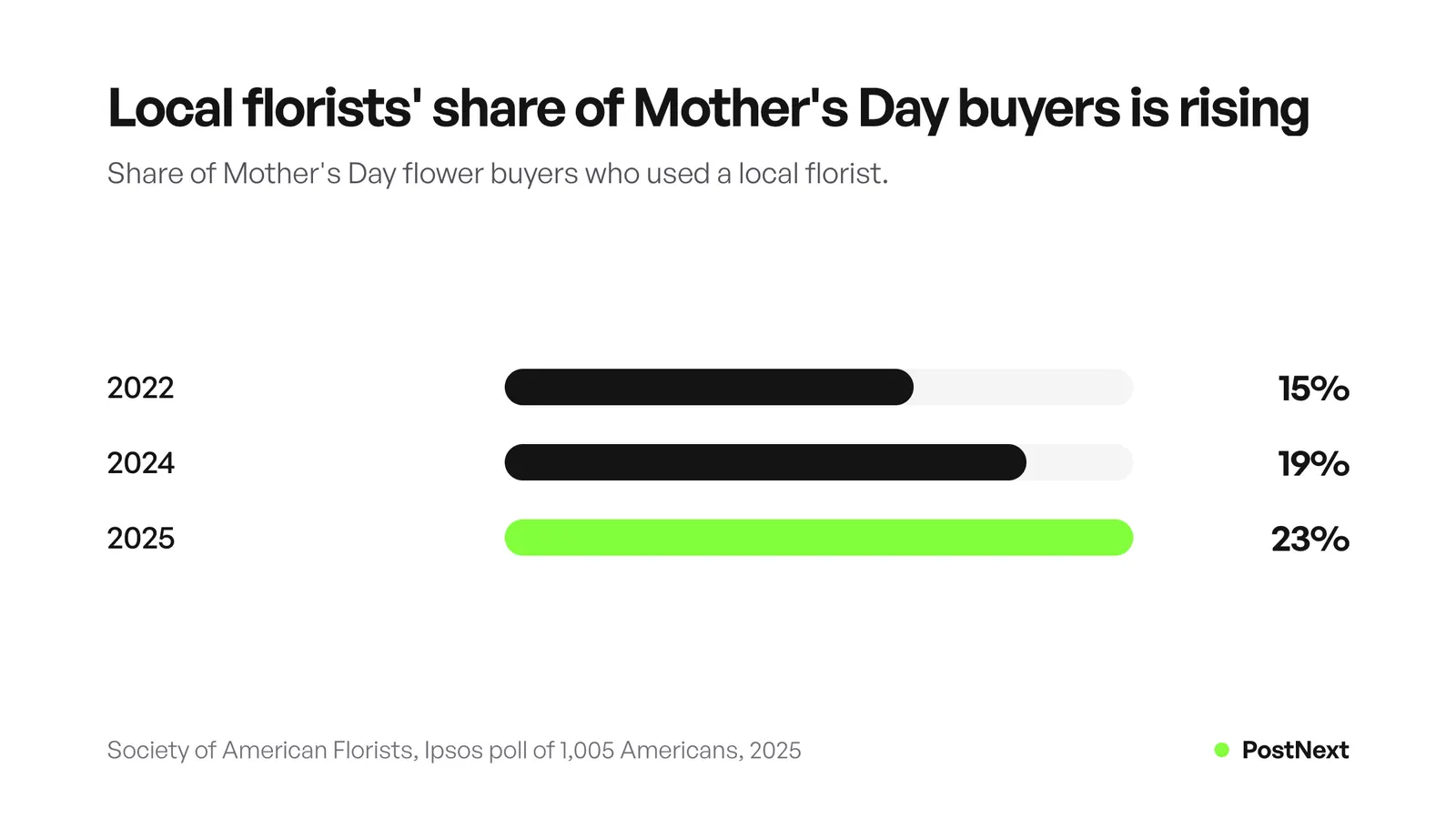
- Local florists can win share: SAF’s 2025 Ipsos poll found 23% of Mother’s Day flower buyers used a local florist, up from 19% in 2024.
- Post six weeks before each peak: pre-orders, delivery areas and the order cut-off need time to reach people.
- Show the price with the bouquet: SAF’s 2025 poll put the average Mother’s Day purchase at $71. A price in the post saves a message.
- Instagram is the shop window: Pew’s 2026 survey found 51% of US adults use Instagram, 56% of women.
- Post every week, not only on holidays: Buffer found accounts that posted in 20 or more of 26 weeks got 450% more engagement per post.
Why should a florist use social media?
A florist should use social media because flowers sell on sight, and a feed is where people see them. Most flower orders are gifts with a date attached, and buyers pick a shop before the day comes. A feed of real bouquets, clear prices and a delivery area makes your shop the one they remember when the date arrives.
The numbers show how much rests on a few days. The Society of American Florists’ holiday ranking puts Valentine’s Day at 30% of holiday flower transactions, Christmas and Chanukah at 26%, and Mother’s Day at 26%. A florist who posts only on the day itself misses the weeks when buyers decide.
Local shops have room to grow. SAF’s 2025 Ipsos poll of 1,005 Americans found 38% bought flowers or plants for Mother’s Day, and 23% of those buyers used a local florist, up from 19% in 2024 and 15% in 2022. Social media is how a local shop reaches the other buyers before they order from a supermarket or a website.
There is a fair limit here. For many florists, most orders still come from Google searches, wire services and regular customers. A good feed helps all three, but a current Google profile with photos and opening hours can bring in more orders than an extra post.
Which social media platforms should florists use?
Most florists need Instagram for bouquets and short video, Facebook for local customers over 40 and for events, and Pinterest for brides who save wedding flower ideas. Add TikTok if you enjoy filming the work. A florist who sells to hotels, offices and event planners also benefits from LinkedIn.
| Channel | Best job for a florist | Who it reaches |
|---|---|---|
| Bouquets, Reels of arranging, weekly specials | 51% of US adults; 56% of women | |
| Local customers, events, holiday pre-orders, reviews | 70% of US adults; 77% of women | |
| TikTok | Arranging videos, flower care, behind the counter | 37% of US adults; 43% of women |
| Wedding and event flower ideas that couples save | Pew did not report Pinterest use for 2026 | |
| Office flowers, hotel and event contracts | 31% of US adults |
Pew Research Center, Social Media Fact Sheet (5,511 US adults, survey January to June 2026), checked November 2026.
Choose by where your orders come from. A shop that sells gift bouquets for delivery needs Instagram and Facebook. A studio that does weddings and events needs Instagram and Pinterest. A florist with office and hotel contracts needs LinkedIn more than TikTok.
What should a florist post on social media?
A florist should post finished flowers with a price, the work behind them, and reasons to order on a given day. Each post should lead to one place: the order page, the wedding enquiry form or the shop’s hours. Six post types cover the year, and a small shop can make them all from one morning of photos.
1. This week’s bouquet, with the price
Photograph one bouquet by the window and post it with the price, the flowers in it and how to order. SAF’s 2025 poll put the average Mother’s Day purchase at $71, so a buyer who sees “$65, delivered” knows straight away if it fits.
2. The arrangement in 15 seconds
Film your hands building one arrangement, sped up, ending on the finished piece. These Reels show skill, and they work on Instagram, TikTok and YouTube Shorts at once. Our list of Instagram Reel ideas has more formats you can film at the bench.
3. What is in season
Post the flowers that arrived from the market this week. People like to know what is fresh, and a seasonal post gives a reason to order now rather than later.
4. Care tips
Show how to cut stems, change the water and keep a bouquet fresh for longer. Customers save these posts, and they show you care what happens after the sale.
5. Weddings and events, with permission
Post the ceremony arch, the table flowers or the bride’s bouquet, after the couple and the photographer say yes. Credit the photographer and the planner; our guide on social media for wedding planners explains who owns wedding photos. Wedding posts bring enquiries a year ahead.
6. The order details
Post the facts people ask about: delivery area, same-day cut-off time, holiday opening hours and how to order. Pin the post to the top of your profile and update it before each holiday.
When should a florist post before Valentine’s Day and Mother’s Day?
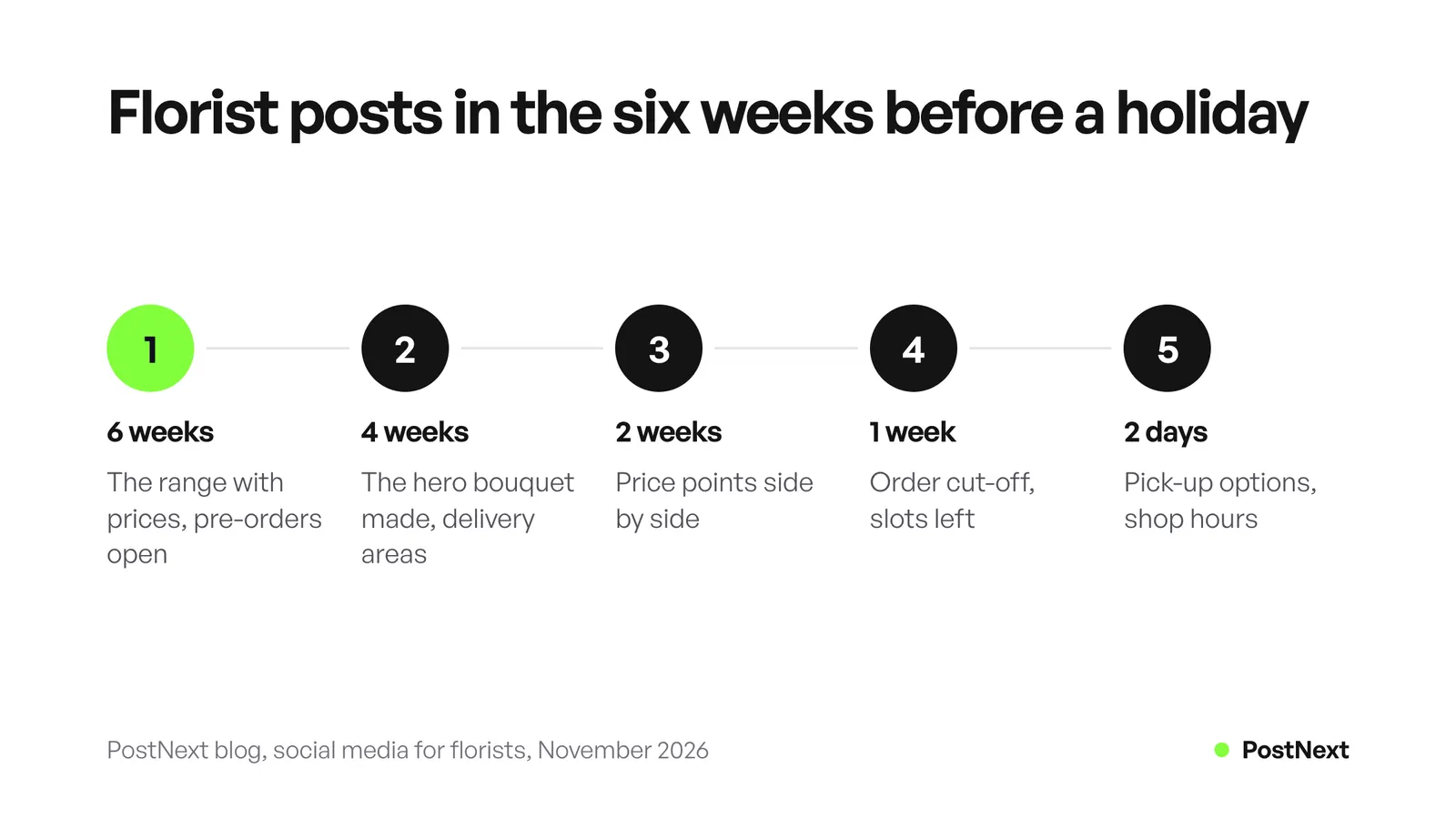
A florist should start posting six weeks before Valentine’s Day and Mother’s Day, and post more as the day gets closer. Early posts take pre-orders and fill the delivery schedule. Late posts give the cut-off time and the last delivery slots. SAF’s 2025 survey of its members found 92% of florists kept taking orders through the Friday before Mother’s Day.
| Weeks before the day | What to post | Why |
|---|---|---|
| 6 weeks | The holiday range with prices, pre-orders open | Planners and people who order early buy now |
| 4 weeks | The making of the hero bouquet, delivery areas | Shows the work and who you can deliver to |
| 2 weeks | Price points side by side, add-ons such as cards or chocolates | Helps buyers choose in one look |
| 1 week | Order cut-off dates, delivery slots left | Gives a reason to order now |
| 2 days | Last-day pick-up options, shop hours | Catches people who forgot |
| The day | Thank-you post, photos of the day’s work | Builds the next year’s audience |
PostNext plan. Holiday shares from the Society of American Florists holiday ranking (undated, on its statistics page) and SAF’s 2025 Ipsos poll, checked November 2026.
In 2027, Valentine’s Day falls on Sunday, February 14, and US Mother’s Day on Sunday, May 9. A Sunday holiday moves deliveries to Friday and Saturday, so put the delivery cut-off in every post from the second week on.
Other dates belong on the calendar too: Christmas, Easter, Thanksgiving, prom season, graduation and Administrative Professionals Day for office orders. Use the same plan for each, scaled down: three weeks of posts for a smaller holiday instead of six.
The work happens in the quiet weeks. Photograph the holiday range in January and April, write the posts in one sitting and schedule them, because there is no time to post in the week before Valentine’s Day.
How often should a florist post?
Three posts a week is a rhythm most florists can keep all year, with more in the six weeks before Valentine’s Day and Mother’s Day. Buffer’s study of more than 100,000 users found accounts that posted in 20 or more of 26 weeks got 450% more engagement per post than accounts that posted in 4 weeks or fewer. The quiet weeks build the audience that orders in the busy ones.
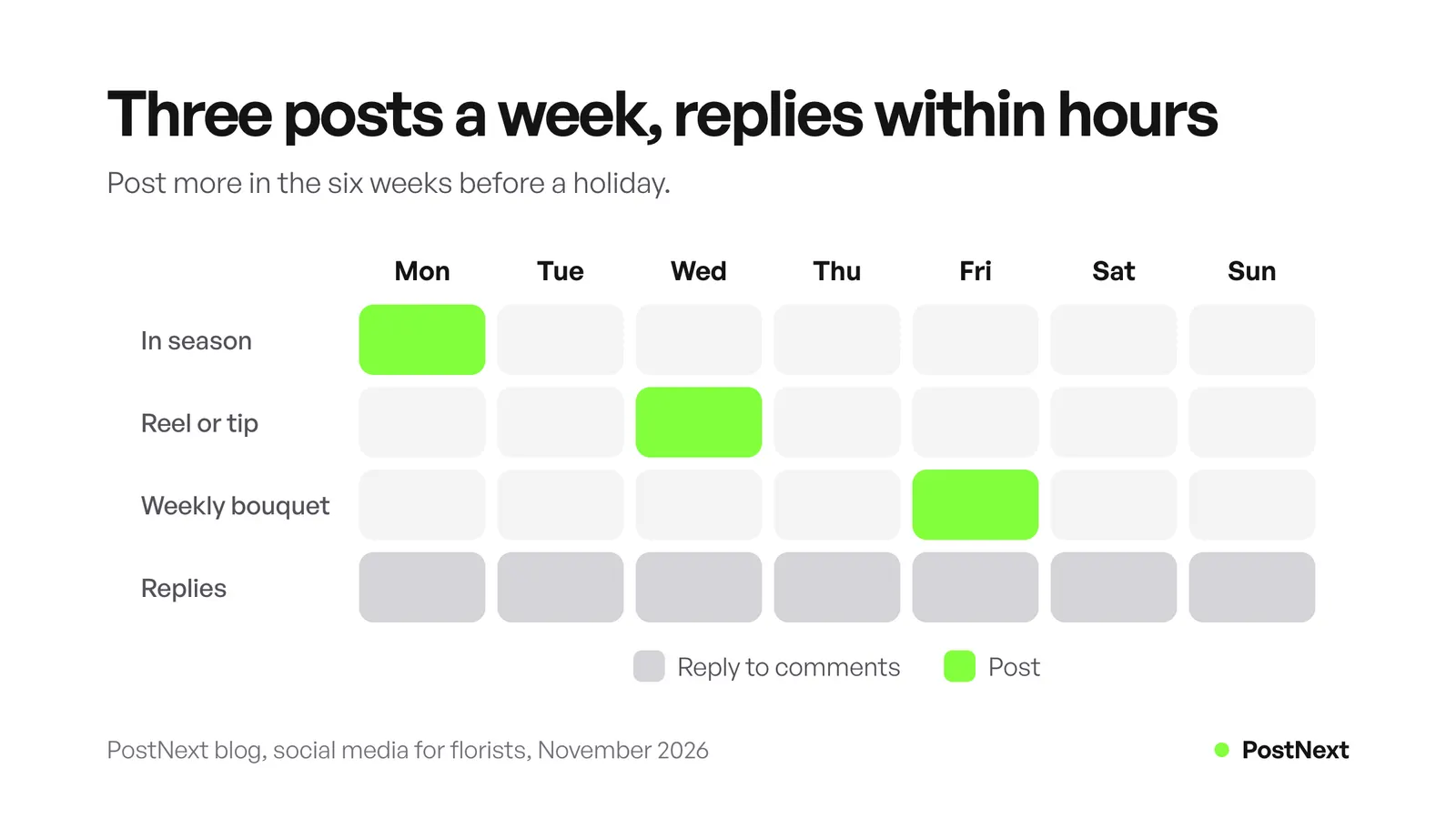
A week that works for a small shop:
- Monday: what is in season this week.
- Wednesday: an arranging Reel, or a care tip.
- Friday: this week’s bouquet with the price, for weekend gifts.
- Every day: reply to comments and messages within a few hours.
How should a florist handle orders that come through social media?
Send every order to one place, and answer messages fast. People who ask “can you deliver to my area tomorrow?” in a comment or a message want an answer the same day. Keep a short list of answers to the questions you get most, and put the order link in every reply.
Take orders on your website or by phone, not in messages, so names, addresses and card messages do not get lost. When many people ask for the same holiday range on Instagram, invite them to comment a word and send the order page to everyone who comments it in a direct message.
Reviews matter as much as posts. BrightLocal’s 2026 survey of 1,002 US adults found 97% read reviews for local businesses and 89% expect owners to respond. Reply to every review, and ask happy customers for one after a holiday rush, when you have the most of them.
How does PostNext help a florist?
PostNext for florists lets a shop plan the whole holiday run in one sitting and publish each post at its time. It posts to Instagram, TikTok, YouTube, LinkedIn, X, Threads and Bluesky from one calendar. The Instagram scheduler publishes feed posts, Reels, image Stories and carousels of 2 to 10 photos or videos.
What fits a florist’s year:
- Schedule the holiday early: write six weeks of Valentine’s Day posts in January and schedule them, so they go out while you are at the bench.
- One clip, three channels: upload one arranging video and post it as a Reel, a TikTok and a YouTube Short, each with its own caption.
- Repeat posts: a weekly post such as “this week’s bouquet” can repeat every 1 to 365 days, weeks or months.
- Comments: the Instagram comment inbox lets you read and reply to comments in one place, on every plan. It does not cover direct messages.
What PostNext does not do today: it does not post to Pinterest, Facebook or Google Business Profile (all three are listed as coming soon), it does not take orders, and it does not run paid ads. The free plan covers 1 channel, 10 posts and 10 AI credits a month; see pricing for the paid plans.
Frequently Asked Questions
What is the best social media platform for florists?
Instagram suits most florists, because people choose flowers by photo and short video. Pew’s 2026 survey found 51% of US adults use Instagram, including 56% of women. Add Facebook for local customers and events, and Pinterest if you do weddings.
When should a florist start posting for Valentine’s Day?
Six weeks before, which is early January. Start with the range and prices, then delivery areas, then cut-off dates in the final week. Valentine’s Day is the top flower holiday in the Society of American Florists’ ranking, with 30% of holiday flower transactions.
How often should a flower shop post on Instagram?
Three times a week is enough for most shops, with more posts in the six weeks before Valentine’s Day and Mother’s Day. Buffer’s study found accounts that posted in 20 or more of 26 weeks got 450% more engagement per post than those that posted in 4 weeks or fewer.
Should a florist show prices on social media?
Yes, for bouquets and holiday ranges. A price answers the first question a buyer has and saves a message. SAF’s 2025 Ipsos poll found the average Mother’s Day flower purchase was $71, so show a range of price points around that figure.
Can a florist post photos from weddings?
Yes, with permission. Ask the couple first, and ask the photographer if a professional took the photos, because the photographer usually owns the copyright. Credit the photographer and the planner in the post.
What should florists post when it is not a holiday?
Post what is in season, a weekly bouquet with a price, arranging videos and care tips. These posts keep your shop in people’s minds, so they think of you when a birthday or an anniversary comes up.
Sources
- Society of American Florists, Mother’s Day floral statistics and holiday ranking (ranking undated), checked November 2026.
- Society of American Florists, Mother’s Day flower purchases and sales climb, May 27, 2025 (Ipsos poll of 1,005 Americans, May 14-15, 2025, and SAF member survey, May 12-20, 2025), checked November 2026.
- Pew Research Center, Social Media Fact Sheet, 5,511 US adults, survey January to June 2026, checked November 2026.
- BrightLocal, Local Consumer Review Survey 2026, 1,002 US adults, published February 2026, checked November 2026.
- Buffer, Consistent Posting Study (buffer.com/resources/consistent-posting-study), January 2025, checked November 2026.
- PostNext pages read November 2026: Instagram channel, automation, pricing.