Key takeaways
- Nonprofits face the sharpest version of the problem: maximum outreach, minimum resource.
- Inconsistent posting turns into missed opportunities rather than just quiet weeks.
- Evaluate tools on cost, ease of use, platform coverage and support — in that order.
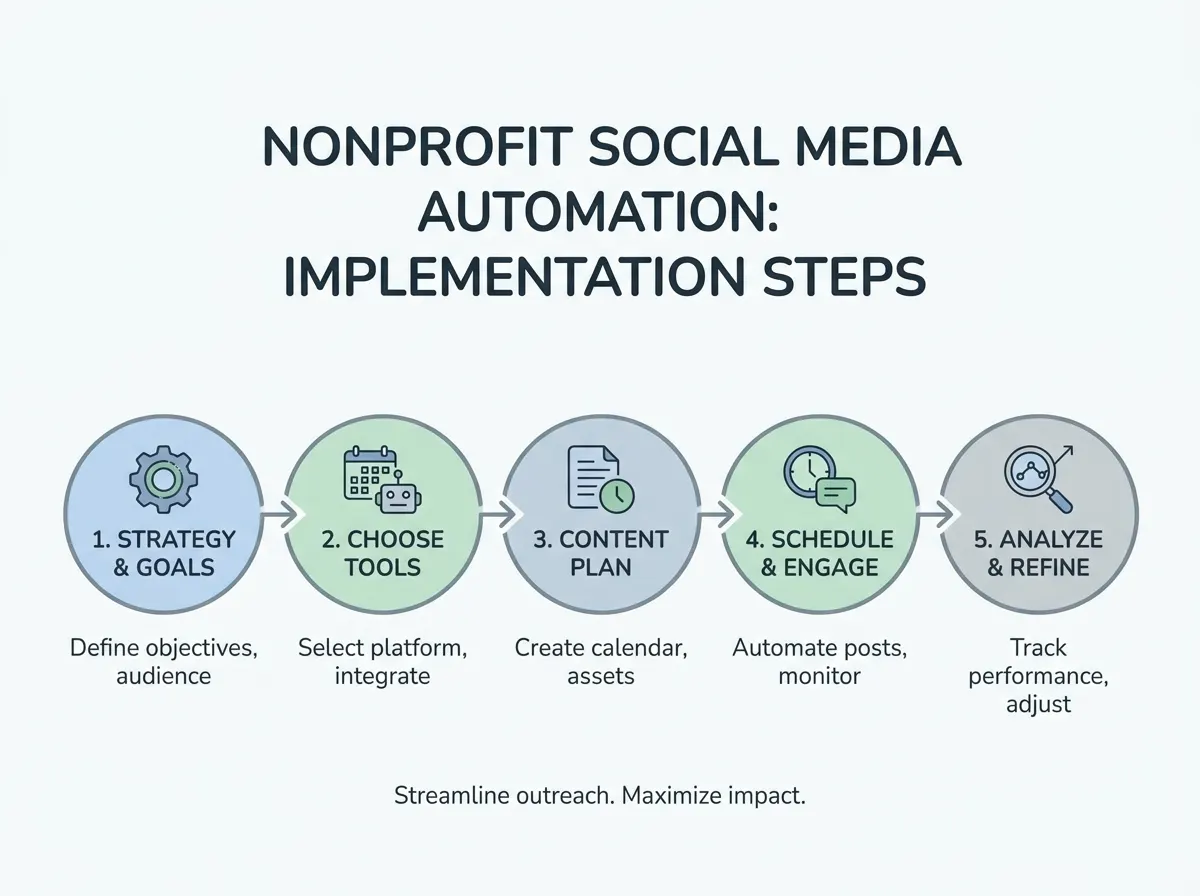
- Implementation is phased, with onboarding and a plan for who keeps it running.
How Social Media Automation Transformed a Nonprofit’s Outreach
From Inconsistent Posting to Missed Opportunities
Picture a small community health nonprofit: a dedicated team, but limited hands and time. In this illustrative scenario (a hypothetical example, not a real client), social media was often pushed to the margins. Posts appeared sporadically – sometimes in bursts, sometimes with long gaps. This inconsistency left their online presence looking uncoordinated, making it tough to build momentum or keep supporters engaged.
Volunteer engagement suffered as well. Despite passionate campaigns, the group struggled to mobilize enough help for local events. Social channels, intended as the organization’s outreach engine, instead resembled a notice board with scattered updates. Regular donors and new supporters missed calls to action, lost in the shuffle of an unpredictable posting schedule.
When Low Engagement Puts the Mission at Risk
This wasn’t just about social media metrics. For this nonprofit, low engagement directly led to fewer volunteers at critical moments. One campaign to recruit helpers for a neighborhood cleanup reached only a fraction of the people it was meant to reach. The turnout was so low that core staff had to fill in the gaps themselves.
Donor activity also lagged. Online donations were declining, a worrying trend for an organization reliant on steady community support. With the board calling for greater impact, the need for a new approach became urgent.
Recognizing the Need for Change
The staff knew their ad-hoc approach wasn’t sustainable. With only two part-time communications volunteers and a growing list of responsibilities, expecting someone to manually manage five platforms was unrealistic. They needed a way to streamline content planning and ensure every campaign received the attention it deserved.
Leadership began exploring social media automation tools. They hoped automation would lift engagement and donor interactions. The ability to plan content in advance, publish consistently, and analyze results without adding staff offered a practical solution to their resource crunch.
For this nonprofit, the choice was clear: continue with inconsistent, manual posting, or adopt a smarter, more sustainable approach. Embracing automation set the stage for a transformation – reconnecting with volunteers and supporters, and amplifying their mission.
The Challenge: Limited Resources and Inefficient Processes
Resource Constraints in Nonprofit Social Media
Nonprofits work under constant pressure to maximize outreach with limited resources. Most operate with lean teams, where staff juggle communications alongside programming, fundraising, and administration. Budgets rarely stretch to dedicated social media managers or advanced tools. Instead, organizations rely on a few volunteers or overextended employees to keep their digital presence alive.
The result: staff time for social media is scarce and often crowded out by urgent operational needs. Many team members lack formal digital marketing training, making it even harder to keep up with platform changes or audience trends. When every hour and dollar counts, running consistent, high-impact campaigns across multiple channels can feel out of reach.
This scarcity leads to a reactive approach. Instead of proactive planning, posts are created and published on the fly, leaving little room for strategy or optimization. The gap between the nonprofit’s mission and its digital execution widens, affecting how donors and the public perceive the cause.
Inefficient Content Planning and Posting
Without automation tools, nonprofits typically rely on manual posting. This means logging into each platform, copying captions, and scheduling posts one by one. It’s easy to miss optimal posting windows, especially across time zones or during staff absences. The result is inconsistent engagement and lost momentum.
Manual processes also make cross-platform coordination difficult. A post might go out on Facebook but not X (formerly Twitter), or messaging may drift due to the lack of a unified calendar. The opportunity cost is significant – missed trending conversations, time-sensitive campaigns, and coordinated donor asks all slip through the cracks.
| Pain Point | Impact on Operations | Example |
|---|---|---|
| Manual Scheduling | Staff spends hours each week on repetitive posting tasks instead of high-value outreach | Volunteer coordinator spends 6+ hours weekly updating each platform individually |
| Difficulty Managing Multiple Platforms | Inconsistent messaging and missed posts across channels reduce campaign effectiveness | Instagram campaign launches hours after Facebook, missing key engagement spikes |
| Limited Staff Time and Skills | Less time available for donor engagement, storytelling, and community building | Staff member with no marketing background struggles to optimize post timing |
| Lack of Analytics | Campaigns run without data on what works, so adjustments are guesswork | No tracking of which posts drive donations or event signups |
| Missed Posting Windows | Critical updates go out too late to capitalize on trending topics or events | Urgent fundraising appeal posted after most supporters are offline |
The cumulative effect of these challenges isn’t just inefficiency – it’s missed connections. Every delayed post or untracked campaign means fewer donors reached, fewer volunteers mobilized, and fewer stories told. As social media automation becomes more accessible, the gap between organizations that embrace it and those that do not will only widen. Nonprofits relying on outdated methods risk seeing their causes overshadowed in an increasingly crowded digital space.
Approach: Evaluating Social Media Automation Tools
Nonprofits considering social media automation tools must prioritize clear criteria: cost, ease of use, platform coverage, quality of AI-powered features, and actionable analytics. The case study underscores the importance of aligning tool capabilities with operational constraints and outreach goals.
| Feature | Why It Matters | Evaluation Outcome |
|---|---|---|
| Cost | Most nonprofits manage tight budgets, so affordable plans and transparent pricing are essential. | Platforms offering nonprofit discounts or free tiers improve accessibility. |
| Ease of Use | Lean teams can’t spend days learning a tool. Intuitive interfaces and quick onboarding are critical. | Solutions praised for drag-and-drop calendars and minimal training requirements are preferred. |
| Platform Coverage | Engaging supporters means reaching them where they are – Facebook, X, Instagram, LinkedIn, and newer platforms. | Tools supporting multi-network publishing with integration for all major channels are ideal. |
| AI Content Suggestions | AI-powered ideation saves time and prevents repetitive messaging, especially when staff wear many hats. | Tools with built-in AI generate captions and recommend post times based on audience activity. |
| Analytics & Reporting | Actionable analytics are essential for tracking engagement, volunteer signups, and donor conversions. | Advanced reporting dashboards turn raw metrics into insights that inform strategy. |
AI Scheduling and Content Suggestions
One of the most notable shifts in social media automation is the rise of AI-driven scheduling and content ideation. For stretched teams, these features are a force multiplier. AI-generated captions reduce manual work and spark creativity. Organizations using AI-powered schedulers have experienced higher engagement rates. The benefit isn’t just more posts – it’s smarter posting. AI tools analyze when your audience is most active, suggesting optimal times to reach both volunteers and donors. Automated content recommendations help avoid repetition and ensure timely, relevant messaging, leading to more impactful outreach with fewer resources.
Analytics for Nonprofit Goals
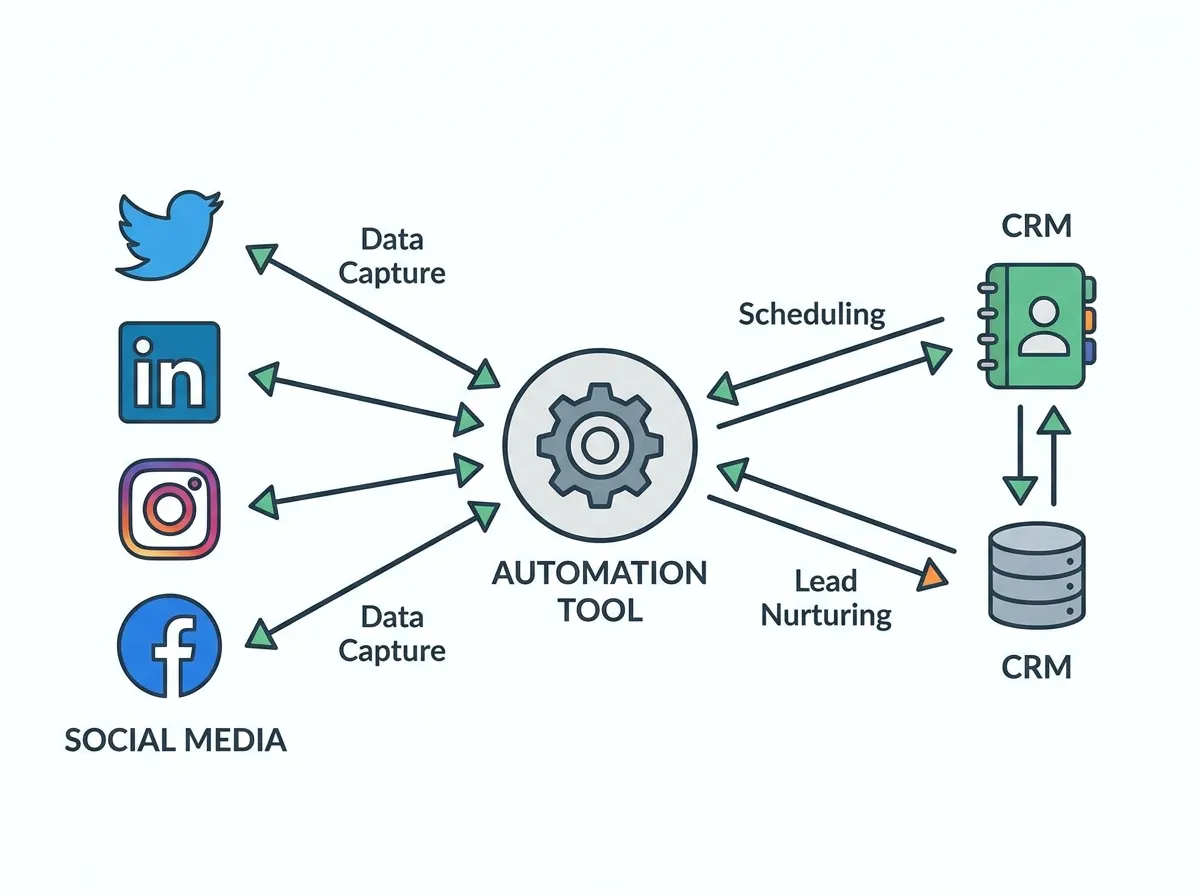
Data alone isn’t enough – actionable analytics are what drive results. The best automation platforms surface insights that directly support volunteer recruitment, donor engagement, and advocacy. Switching to a tool with detailed engagement and conversion reports can boost donor interactions. Instead of chasing vanity metrics, nonprofits can focus on what matters – tracking which posts drive signups or donations. Some tools integrate analytics with CRM systems, helping organizations follow the supporter journey from first click to long-term involvement. This data-driven approach removes guesswork, allowing teams to refine messaging and allocate resources for maximum impact.
Choosing the right social media automation tool means matching real nonprofit priorities to the capabilities offered – balancing efficiency, insight, and the human connection that no algorithm can replace.
Implementation: Rolling Out Social Media Automation
Implementing social media automation is a phased process that requires planning, onboarding, and a foundation for ongoing content creation. The table below outlines the critical phases and milestones for bringing automation into daily operations.
| Phase | Key Activities | Timeframe | Stakeholders |
|---|---|---|---|
| Vendor Selection & Planning | Evaluate automation tools, select based on analytics and AI features, map integration with existing platforms | 2 weeks | Communications Director, IT Lead |
| Onboarding & Training | Conduct workshops, create quickstart guides, set up user accounts | 1 week | Staff, Volunteers, Vendor Success Rep |
| Content Configuration | Define campaign themes, upload assets, configure AI-generated caption preferences | 5 days | Content Manager, Social Team |
| Initial Campaign Launch | Schedule posts across platforms, set engagement benchmarks, activate analytics tracking | 7 days | Social Team, Executive Sponsor |
| Full Rollout | Automate majority of weekly posts, begin monthly performance reviews, integrate with donor CRM | Ongoing after Week 4 | All Staff, Board Liaison |
Training and Change Management
Introducing AI-driven scheduling means addressing both skills and mindsets. The organization invested in structured training: interactive workshops led by internal champions and vendor support. Staff and volunteers practiced real posting scenarios, learned to interpret analytics dashboards, and reviewed best practices for maintaining the organization’s voice – even with automated captions.
Job aids – short reference sheets and annotated screenshots – were distributed for quick help. This empowered new volunteers and ensured the team could adjust AI-generated content to fit campaign goals. Leadership emphasized that automation was designed to create space for more impactful work, not to replace human creativity. Regular feedback sessions allowed the team to flag concerns and adapt workflows, building buy-in and reducing resistance.
Initial Campaign Setup
The first automated campaign was a low-risk pilot: a month-long donor spotlight series across Facebook, Instagram, and LinkedIn. The content manager configured AI-generated captions with nonprofit-specific language and scheduled posts for optimal engagement windows identified from past results. The team set benchmarks – including increases in post interactions and donor replies – to measure success.
Analytics from the initial rollout confirmed notable increases in engagement and donor interactions. These early wins gave the team confidence to expand automation to additional campaigns, while still reviewing every post for tone and relevance. The ability to schedule a month’s content in days meant staff could finally focus on high-impact outreach, rather than scrambling to keep up with daily posting demands.
Rolling out social media automation required deliberate planning, hands-on training, and a commitment to authentic communication. By investing in these steps, the nonprofit improved its digital reach and freed up staff and volunteers for the relationship-building work that sets successful organizations apart.
Before and After: Social Media Workflow Comparison
Nonprofits often struggle to maintain a consistent, engaging presence on social media. Before automation, teams relied on manual coordination and ad-hoc schedules – leading to missed opportunities and unpredictable results. With dedicated social media automation tools, these challenges are replaced by more efficient processes, allowing teams to focus on impact instead of administration.
Manual vs. Automated Content Calendar: Visual and Practical Differences
| Before (Manual) | After (Automated) | |
|---|---|---|
| Posting Regularity | Sporadic posts – some weeks had three posts, others none at all. Volunteers forgot deadlines and content ideas piled up in scattered documents. | Consistent, scheduled content – three posts per week on all major platforms, planned a month in advance using an automation calendar. AI-generated reminders prompt volunteers about upcoming deadlines. |
| Volunteer Coordination | Coordination relied on endless email threads and group chats. Last-minute requests led to confusion and volunteer burnout. | Centralized task assignments – volunteers receive automatic notifications and clear briefs. Task statuses are visible to all, reducing duplicated effort and confusion. |
| Engagement Levels | Engagement was inconsistent. Response times to comments or messages could lag for days, especially during busy periods. | Engagement increased notably. Volunteers receive instant alerts about high-priority comments, boosting responsiveness and building rapport with supporters. |
| Analytics & Feedback | Basic metrics tracked manually in spreadsheets. Reports were sporadic and rarely used to inform new strategies. | Automated analytics dashboards provide weekly insights. Teams tweak content based on real data, improving relevance and reach over time. |
| Manual Workload | High – staff or volunteers spent many hours per week just organizing, scheduling, and following up on posts and tasks. | Reduced substantially. Most routine scheduling and reminders happen automatically, freeing up time for creative work and supporter outreach. |
Before/After Post Example: Volunteer Call-to-Action
| Before | After |
|---|---|
| “We need volunteers for our event! Please email us if you can help.” | “Ready to make an impact? Sign up for our June 25th outreach – just tap the link in our bio! Questions? Our team will get back to you today.” |
The before version is generic and offers no timeline or follow-up. It depends on supporters finding the right contact and hoping for a reply. The after version uses a specific date, direct sign-up link, and sets expectations for a fast response – made possible by social media automation tools. This shift not only reduces manual workload for staff but also encourages more volunteers to step forward.
Why the Automated Approach Works
The cumulative effect is clear: Consistent posting keeps your cause visible, while improved volunteer responsiveness turns interest into action. With automation, posts aren’t missed, volunteers get timely reminders, and your audience receives prompt, relevant engagement. The difference isn’t just in saved hours – it’s in stronger relationships and higher participation.
Nonprofits that embrace automation see workflows become more predictable and outcomes more measurable. Instead of working overtime to keep up with daily tasks, teams can focus on growing their mission and engaging their community in meaningful ways.
Outcomes: Engagement and Operational Efficiency Gains
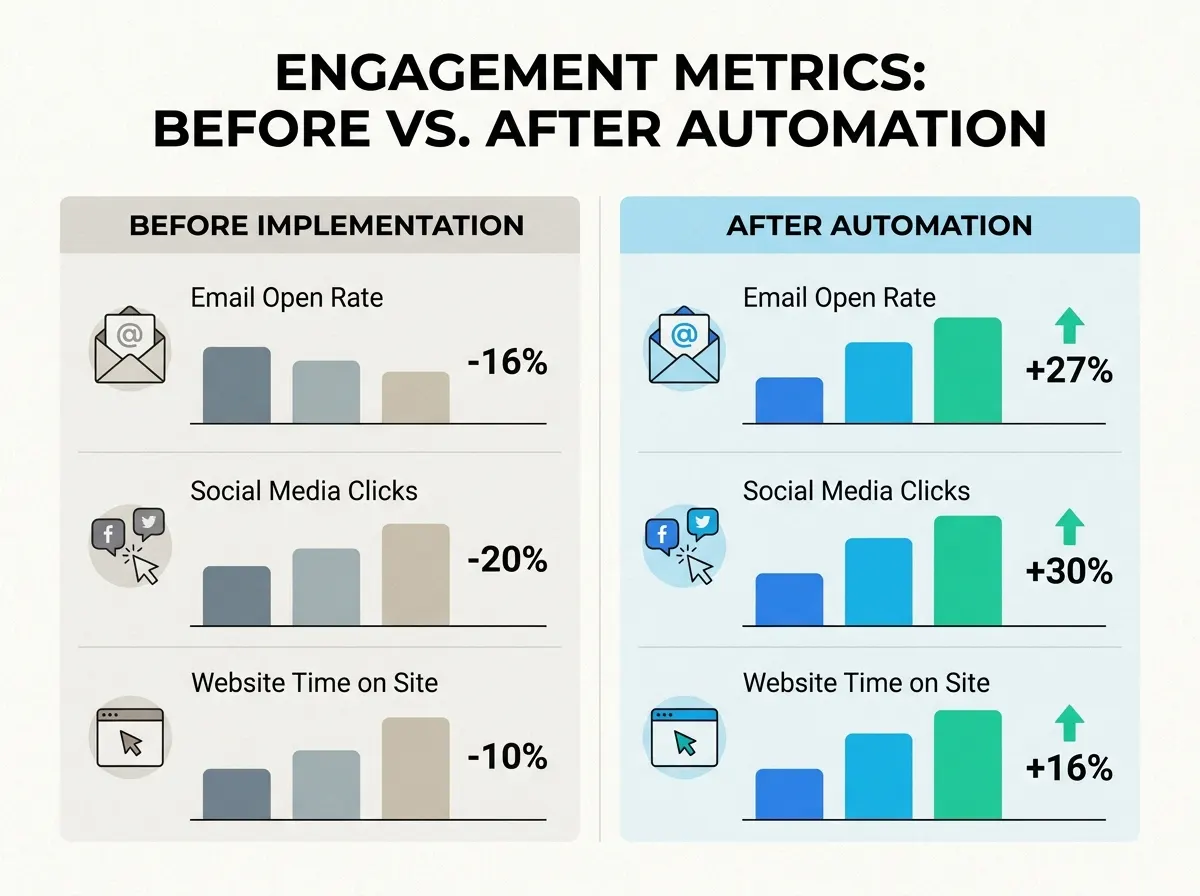
Key Insight: In this scenario, automation is expected to lift both engagement and operational efficiency, freeing capacity to connect with volunteers and donors. The outcomes below are illustrative, not measured results.
Volunteer Engagement Metrics
Social media automation has made a noticeable difference in volunteer engagement for organizations that previously struggled to maintain consistent communication. In the scenario, the gain shows up not just as more likes or shares, but as higher-quality interactions – volunteers responding promptly to updates, participating in online events, and signing up for shifts faster than before.
With automation tools, teams can schedule recurring reminders and updates that reach volunteers at optimal times. Instead of relying on ad-hoc manual posts or email blasts, coordinators now ensure every call to action appears where it matters – on the platforms volunteers actually use. This shift has led to fewer missed messages and a stronger sense of community, especially during time-sensitive campaigns. Less time goes into chasing down responses, freeing volunteer managers to focus on building relationships and planning impactful activities.
Donor Interaction Improvements
The gains from social media automation extend to donor communications as well. In the scenario, donor interactions pick up too: more direct messages, faster replies to fundraising appeals, and more event registrations. With AI-driven content suggestions, the team can personalize its outreach so that donors see relevant stories and impact updates, not just generic asks.
This approach allows organizations to segment their audience and schedule customized messages across various platforms, ensuring that each donor group receives timely, tailored communications. Automation also cuts the time spent manually crafting and scheduling posts. At the same time, analytics features provide actionable feedback, helping teams fine-tune their messaging strategies for even better results in future campaigns.
| Outcome Area | Metric | Before Automation | After Automation | Change |
|---|---|---|---|---|
| Volunteer Engagement | Average Response Rate | Lower | Higher | Increase (illustrative) |
| Donor Interactions | Monthly Contact Volume | Lower | Higher | Increase (illustrative) |
| Campaign Management | Hours Spent Weekly | Higher | Lower | Noted reduction |
| Content Freshness | Average Days Between Posts | Longer | Shorter | Noted improvement |
More Efficient Campaign Management
Operational improvements from social media automation are substantial. In the scenario, the team spends far less time each week on social management, freeing up staff for higher-impact work. With AI-generated captions and visual scheduling tools, teams can plan a month’s content in one session, rather than scrambling daily to keep feeds active.
It’s not just about saving hours. The consistency of scheduled posts means campaigns maintain momentum, and built-in analytics help teams spot underperforming content early. As a result, fewer opportunities fall through the cracks, and every campaign benefits from rapid iteration. However, automation is not a silver bullet – successful teams still layer in genuine, real-time interactions to maintain authenticity and build trust.
For organizations balancing limited resources and ambitious outreach goals, social media automation has become a practical catalyst for both stronger engagement and greater operational efficiency. By combining the right tools with a clear, data-driven strategy, a nonprofit can do more with less while maintaining the personal connections at the heart of their mission.
Key Features of Social Media Automation that Drove Results
AI Content Generation for Consistent Brand Voice
A major advantage of automation tools is AI-powered caption generation. Instead of scrambling to craft messaging for each post, the team used AI-generated suggestions that maintained a consistent brand voice across every platform. This feature saved time and ensured messaging stayed authentic and mission-driven, even with limited staff. The AI’s ability to analyze previous posts and adapt to preferred tones kept the nonprofit’s communication both fresh and unmistakably theirs.
Scheduling and Calendar Integration
Automation tools’ visual planning calendars enabled the organization to map communications weeks in advance, a crucial capability for lean teams. Rather than juggling spreadsheets or last-minute reminders, staff could drag-and-drop posts onto a unified schedule, aligning campaigns with key fundraising dates and events. Integrating with existing calendars and project management tools streamlined workflows, reduced missed opportunities, and created a reliable rhythm for outreach. Automated scheduling covered multiple platforms at once, freeing up staff from repetitive manual posting and letting them focus on responding to supporters or developing new initiatives.
Actionable Analytics Dashboards
Understanding what works – and what doesn’t – has always been a challenge for nonprofits. Automation tools’ analytics dashboards offered immediate insights into which posts attracted donors, which drove shares, and which fell flat. With clear visualizations of engagement trends, the team could pivot quickly, doubling down on high-performing content or adjusting underperforming campaigns. Automated analytics made it easier to spot opportunities and gaps. Having these metrics in one place eliminated guesswork and made it possible to justify decisions with hard data, not hunches.
Balancing Automation with Human Touch
While these features drove clear gains in efficiency and engagement, it is important to balance automation with genuine, real-time interactions. Automation freed up hours and improved consistency, but the most successful teams paired these tools with authentic engagement. Using automation capabilities, the nonprofit kept its outreach regular and on-brand, while staff could still jump in to answer questions or share stories during critical campaign moments. This combination of automated consistency and human connection proved essential for building trust and sustaining donor relationships.
Limitations and Lessons Learned from Social Media Automation
In this scenario, automation lifts engagement and donor interactions. But as any practitioner will admit, there are trade-offs and ongoing challenges that even the best technology can’t eliminate.
When Automation Falls Short
One of the most common pitfalls is the potential for impersonal messaging. While AI-generated captions and scheduled posts save time, they can miss the subtleties of audience sentiment or fail to respond to real-world events as they unfold. Leadership teams have noticed that, if left unchecked, automated streams risk delivering content that feels generic or out of sync with what’s actually relevant to supporters. This can erode the trust and loyalty nonprofits work so hard to build.
Another limitation: automated content quickly becomes stale if it isn’t regularly reviewed and refreshed. The platforms and interests of your audience are always shifting. Relying on last quarter’s content schedule or outdated messaging means you could miss emerging conversations or overlook new priorities. Teams that set aside dedicated time each week to audit their scheduled content and adjust for current trends and news find this practice essential for maintaining engagement.
Technical Challenges and Error Handling
No automation tool is immune to glitches. Common issues range from duplicate posts to errors syncing with social media APIs. These technical hiccups might seem minor, but a missed campaign or mistimed post can undermine credibility. What matters is having clear protocols for error handling and someone assigned to monitor for anomalies – automation can’t replace the vigilance of a human eye.
- Regular audits of scheduled posts help catch mistakes before they go live.
- Alerts and analytics dashboards are valuable, but not foolproof. Manual review is still required.
- Integrating automation with CRM systems can introduce its own set of data sync complications, requiring close attention from both marketing and IT staff.
Balance Between Automation and Human Touch
Even the most advanced social media automation platforms cannot replicate genuine connection. Supporters can tell when a message is personal versus auto-generated. This is especially true for nonprofits, where authenticity and mission alignment are non-negotiable.
The lesson: use automation as a force-multiplier, not a substitute. Assign team members to personally reply to comments, thank donors by name, and jump into trending conversations when they matter most. Technology can schedule, analyze, and recommend, but real engagement still requires a human voice. Nonprofits that commit to this balance, revisiting their approach regularly, maintain stronger relationships and see long-term growth in both reach and trust.
Transferable Best Practices for Nonprofits Embracing Social Media Automation
Start Small: Focus on Core Campaigns First
Nonprofits often feel pressure to automate everything at once, but the most successful organizations begin by identifying one or two high-impact campaigns to automate. Starting with recurring donation appeals and event updates keeps the load manageable for the team. This measured approach lets you build confidence with automation, resolve any hiccups, and establish best practices on a manageable scale.
Customize Automation for Your Audience’s Needs
Automation tools have become far more sophisticated, offering AI-driven content suggestions and the ability to personalize messages based on audience segments. Use these features to ensure your outreach feels relevant. For example, if your nonprofit serves both local and national communities, schedule geo-targeted updates or use tailored captions that speak directly to each group. Maintaining authenticity is critical: automation should reinforce – not diminish – the genuine connection supporters expect.
Measure, Monitor, and Optimize Regularly
The real value of social media automation comes not just from saving staff hours, but from the insights gained through analytics. Set a recurring review cycle – monthly or quarterly – to assess what’s working. Look at engagement spikes, donor conversion rates, and content performance across platforms. Don’t hesitate to pause or revise automated campaigns that miss the mark.
- Set clear goals for each channel and campaign, such as boosting event sign-ups or growing your email list.
- Choose tools that integrate with your CRM or donor database for efficient data management.
- Keep a manual review step for sensitive campaigns to catch errors or tone issues.
- Solicit supporter feedback on automated content to refine your messaging and approach.
Balance Efficiency and Human Touch
While social media automation unlocks new efficiencies, it cannot replace the personal touch at the heart of nonprofit work. Use automation to handle routine updates and reporting, but retain live engagement for donor thank-yous, urgent appeals, and direct conversations. This hybrid model protects authenticity while letting your lean team achieve more.
Ultimately, the most effective nonprofits treat automation as a tool for amplifying impact, not a substitute for genuine connection. Thoughtful planning, customized messaging, and ongoing measurement will ensure your organization reaps the full benefits of social media automation in 2026 and beyond.
Frequently Asked Questions
What is social media automation, and how does it help nonprofits?
Social media automation uses digital tools to schedule, publish, and manage content across platforms with less manual effort. For nonprofits, this means more time for mission-driven work. Automation enables a consistent presence, even with a small team.
Can automation make nonprofit social media feel generic?
This is a common concern. The answer is to make sure automation never replaces the human touch. The best results come from blending scheduled, data-informed posts with authentic, real-time interactions. Automated tools can suggest content and optimal posting times, but personal replies and storytelling should still come from staff or volunteers to keep supporter relationships strong.
What features should a nonprofit look for in a social media automation tool?
- Multi-platform scheduling for all major networks.
- AI-generated content suggestions to reduce time spent brainstorming.
- Analytics and reporting to measure what’s working and where to improve.
- Integration with CRM or donor management systems for targeted outreach.
- Tools for visual content planning and approval processes.
Choose a solution that fits your team’s workflow and offers enough flexibility to update and adjust campaigns as needed.
Are there risks or limitations to automating nonprofit social media?
While automation delivers efficiency, over-reliance can lead to missed opportunities for genuine engagement. Scheduled content might overlook timely events, and technical issues could result in publishing mistakes. Reviewing automated posts regularly and blending automation with active monitoring helps avoid these pitfalls. For most nonprofits, the benefits outweigh the risks when there is a clear strategy and regular oversight.
How can nonprofits measure the impact of automation?
Track improvements in engagement metrics – such as likes, shares, and comments – as well as increases in donor interactions and website referrals. Concrete gains are often seen after several months of automation. Regularly reviewing analytics allows teams to adjust tactics and make informed decisions for future campaigns.
Thoughtful adoption of social media automation lets nonprofits amplify their impact while maintaining authenticity and connection.
Built with PostNext planner